Word Explanation
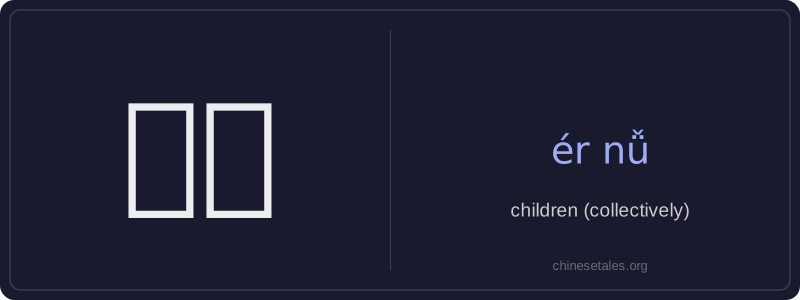
‘儿女’ literally combines 儿 (ér, 'son') and 女 (nǚ, 'daughter') to mean 'children' collectively — referring to one’s sons and daughters as a group, without specifying gender or number. It is a warm, traditional, and slightly literary term often used in family contexts, storytelling, or formal speech. Unlike the neutral word 孩子 (hái zi), ‘儿女’ emphasizes the parent-child relationship and carries emotional weight, suggesting care, responsibility, or legacy.
This term is commonly used in expressions about family life, aging parents, filial duty, or generational continuity — for example, when describing how parents raise their children, how grown children support elderly parents, or how people speak proudly of their ‘儿女’. It rarely appears in bureaucratic or clinical settings; instead, it belongs to personal, cultural, and emotive discourse. Though grammatically plural, it functions as an uncountable noun and takes no plural marker like 们 (men).
Example Sentences
Related Words
我的
我的 (wǒ de) is a possessive pronoun meaning 'my'
这么
这么 (zhè me) is an adverb meaning 'so' or 'this
这边
这边 (zhè biān) literally combines 这 (zhè, 'th
中国
‘Zhōngguó’ literally means ‘Middle Kingdom’
中学
'Zhōngxué' literally combines 'zhōng' (middle)
一天
‘一天’ literally combines the numeral ‘一’ (y
一心
‘一心’ literally combines ‘one’ (一) and ‘hea
在家
'Zài jiā' literally combines the preposition 'z