Word Explanation
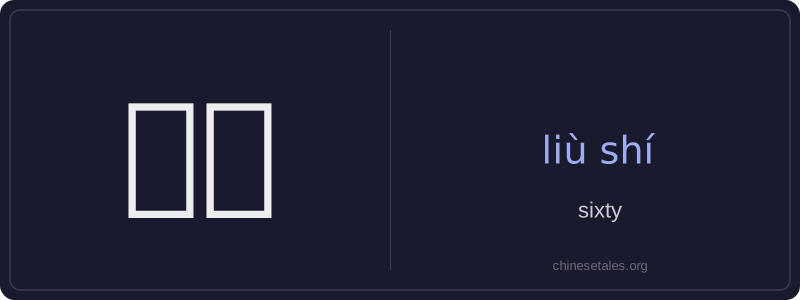
六十 (liù shí) is the Chinese numeral for 'sixty', formed by combining 六 (liù, 'six') and 十 (shí, 'ten'). In Mandarin’s base-ten number system, multi-digit numbers are constructed additively: 六十 literally means 'six tens', equivalent to 6 × 10 = 60. It functions exclusively as a cardinal number and is used in counting, ages, quantities, measurements, and time expressions (e.g., minutes or seconds).
This numeral follows standard Chinese number formation rules—no 'and' or hyphen is used, unlike English. It appears in formal and informal contexts alike, such as stating someone’s age, describing prices, or giving scores. Unlike English, 六十 never changes form for grammatical agreement and always precedes the noun it modifies (e.g., 六十岁, 六十元). It is also part of larger numbers (e.g., 六百六十 for '660') and common idioms like 六十花甲, referring to a traditional 60-year life cycle.
Example Sentences
Related Words
我的
我的 (wǒ de) is a possessive pronoun meaning 'my'
这么
这么 (zhè me) is an adverb meaning 'so' or 'this
这边
这边 (zhè biān) literally combines 这 (zhè, 'th
中国
‘Zhōngguó’ literally means ‘Middle Kingdom’
中学
'Zhōngxué' literally combines 'zhōng' (middle)
一天
‘一天’ literally combines the numeral ‘一’ (y
一心
‘一心’ literally combines ‘one’ (一) and ‘hea
在家
'Zài jiā' literally combines the preposition 'z