Word Explanation
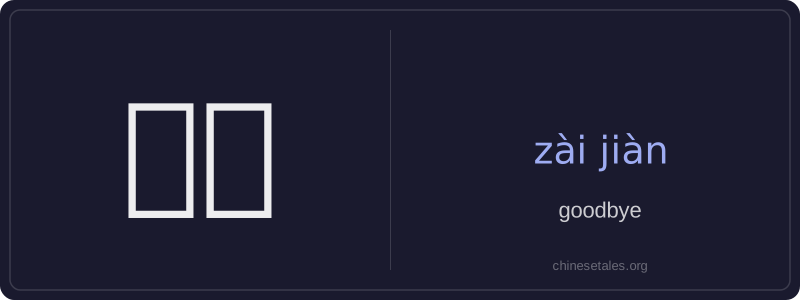
'Zài jiàn' literally means 'see again'—'zài' means 'again' and 'jiàn' means 'to see'. Together, they form a conventional farewell expression equivalent to 'goodbye' in English. Unlike English, where 'goodbye' carries no literal meaning, this phrase reflects the Chinese cultural emphasis on connection and the hope of future meetings. It is neutral in tone and appropriate for most everyday situations, whether formal or informal.
While often used as a standalone utterance when parting, 'zài jiàn' can also appear at the end of longer sentences (e.g., after 'Thank you' or 'Have a nice day'). It is not used when answering the phone (use 'wéi' instead) or when addressing someone who is leaving permanently without expectation of return (where more solemn phrases like 'bǎozhòng' may be preferred). Children learn it early as one of the first social expressions, and adults use it routinely in shops, offices, schools, and homes.
Example Sentences
Related Words
我的
我的 (wǒ de) is a possessive pronoun meaning 'my'
这么
这么 (zhè me) is an adverb meaning 'so' or 'this
这边
这边 (zhè biān) literally combines 这 (zhè, 'th
中国
‘Zhōngguó’ literally means ‘Middle Kingdom’
中学
'Zhōngxué' literally combines 'zhōng' (middle)
一天
‘一天’ literally combines the numeral ‘一’ (y
一心
‘一心’ literally combines ‘one’ (一) and ‘hea
在家
'Zài jiā' literally combines the preposition 'z