Word Explanation
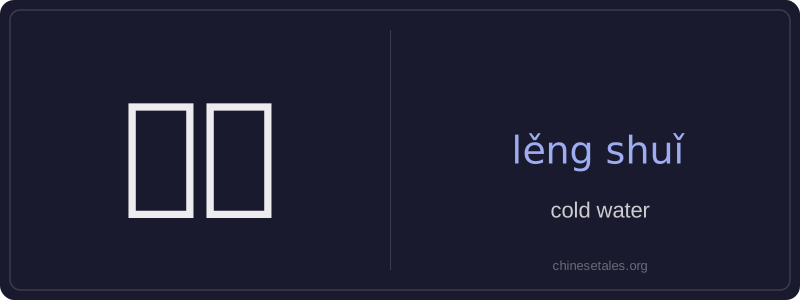
冷水 literally means 'cold water' — it combines the adjective 冷 (lěng), meaning 'cold', and the noun 水 (shuǐ), meaning 'water'. Together, they form a compound noun referring to water that is at or near room temperature or chilled, but not ice-cold or frozen. It contrasts with 热水 (rè shuǐ, 'hot water') and 温水 (wēn shuǐ, 'warm water').
This term is commonly used in daily health and hygiene contexts — for example, drinking cold water after exercise, rinsing wounds, or washing produce. In traditional Chinese medicine, consuming too much 冷水 is sometimes cautioned against, especially on an empty stomach or during illness, as it’s believed to affect digestion. It also appears in cooking instructions (e.g., blanching vegetables in cold water to stop cooking) and household routines like cooling down cooked rice.
Example Sentences
Related Words
我的
我的 (wǒ de) is a possessive pronoun meaning 'my'
这么
这么 (zhè me) is an adverb meaning 'so' or 'this
这边
这边 (zhè biān) literally combines 这 (zhè, 'th
中国
‘Zhōngguó’ literally means ‘Middle Kingdom’
中学
'Zhōngxué' literally combines 'zhōng' (middle)
一天
‘一天’ literally combines the numeral ‘一’ (y
一心
‘一心’ literally combines ‘one’ (一) and ‘hea
在家
'Zài jiā' literally combines the preposition 'z