Word Explanation
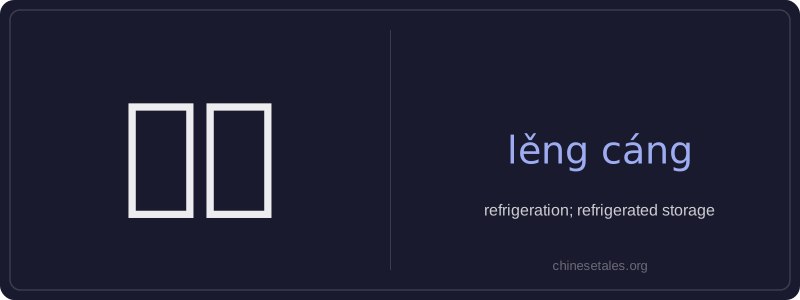
冷藏 literally means 'cold storage' — 冷 (lěng) means 'cold', and 藏 (cáng) means 'to store' or 'to preserve'. Together, they form a noun referring to the process or condition of keeping items at low temperatures to slow spoilage, especially food and medicines. It is commonly used in both everyday and technical contexts, such as appliance labels ('refrigerator' is 冰箱, but its function is 冷藏), food packaging ('keep refrigerated'), and medical logistics ('refrigerated transport').
This term emphasizes temperature-controlled preservation rather than freezing: 冷藏 typically implies cooling (0–4°C), whereas 冷冻 (lěng dòng) means 'freezing' (below 0°C). It’s often paired with verbs like 进行 (to carry out), 需要 (requires), or 保存 (to preserve), and appears in compound nouns like 冷藏柜 (refrigerated cabinet) and 冷藏室 (refrigeration compartment).
Example Sentences
Related Words
我的
我的 (wǒ de) is a possessive pronoun meaning 'my'
这么
这么 (zhè me) is an adverb meaning 'so' or 'this
这边
这边 (zhè biān) literally combines 这 (zhè, 'th
中国
‘Zhōngguó’ literally means ‘Middle Kingdom’
中学
'Zhōngxué' literally combines 'zhōng' (middle)
一天
‘一天’ literally combines the numeral ‘一’ (y
一心
‘一心’ literally combines ‘one’ (一) and ‘hea
在家
'Zài jiā' literally combines the preposition 'z