Word Explanation
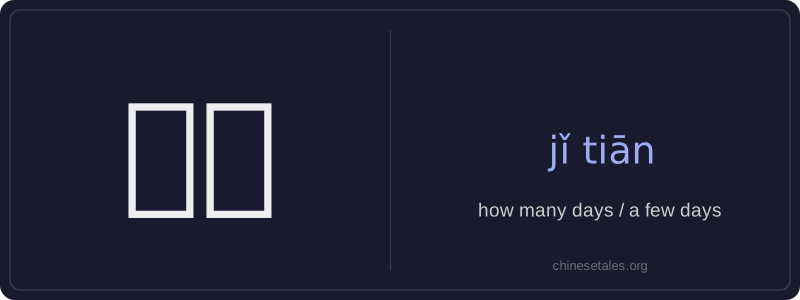
几天 (jǐ tiān) literally combines 几 (jǐ), meaning 'how many' or 'a few', and 天 (tiān), meaning 'day(s)'. Together, it functions as a quantified time expression that can mean either 'how many days?' in questions or 'a few days' in statements—its meaning depends entirely on context and sentence structure. It is an indefinite quantifier for short durations, typically implying three to seven days, not a precise count.
This phrase commonly appears in casual spoken and written Chinese when discussing short-term plans, recent events, or brief periods of time. It often follows measure words like 这 (this), 那 (that), or 前 (before), as in 这几天 (these past few days) or 前几天 (a few days ago). Unlike exact numbers (e.g., 三天), 几天 carries vagueness and informality, making it unsuitable for formal reports or strict scheduling contexts.
Example Sentences
Related Words
我的
我的 (wǒ de) is a possessive pronoun meaning 'my'
这么
这么 (zhè me) is an adverb meaning 'so' or 'this
这边
这边 (zhè biān) literally combines 这 (zhè, 'th
中国
‘Zhōngguó’ literally means ‘Middle Kingdom’
中学
'Zhōngxué' literally combines 'zhōng' (middle)
一天
‘一天’ literally combines the numeral ‘一’ (y
一心
‘一心’ literally combines ‘one’ (一) and ‘hea
在家
'Zài jiā' literally combines the preposition 'z