Word Explanation
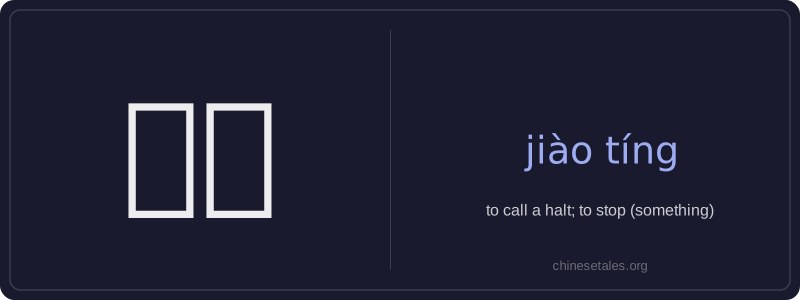
‘叫停’ is a compound verb meaning ‘to call a halt’ or ‘to stop (something)’, often used in formal, official, or public contexts. Literally, 叫 means ‘to call’ or ‘to order’, and 停 means ‘to stop’ or ‘to halt’. Together, they convey the idea of someone in authority—such as a government agency, supervisor, or organizer—issuing an order to suspend an activity, project, or process. It implies an external, deliberate intervention rather than a natural or voluntary cessation.
The term is frequently seen in news reports, policy announcements, and workplace communication—for example, when regulators halt unsafe construction, schools cancel events for safety reasons, or managers pause a flawed procedure. It carries a tone of urgency, seriousness, or corrective action, and is rarely used for casual, personal stopping (e.g., ‘I stopped walking’). While grammatically transitive, it’s often used without an explicit object when the context makes the halted activity clear.
Example Sentences
Related Words
我的
我的 (wǒ de) is a possessive pronoun meaning 'my'
这么
这么 (zhè me) is an adverb meaning 'so' or 'this
这边
这边 (zhè biān) literally combines 这 (zhè, 'th
中国
‘Zhōngguó’ literally means ‘Middle Kingdom’
中学
'Zhōngxué' literally combines 'zhōng' (middle)
一天
‘一天’ literally combines the numeral ‘一’ (y
一心
‘一心’ literally combines ‘one’ (一) and ‘hea
在家
'Zài jiā' literally combines the preposition 'z