Word Explanation
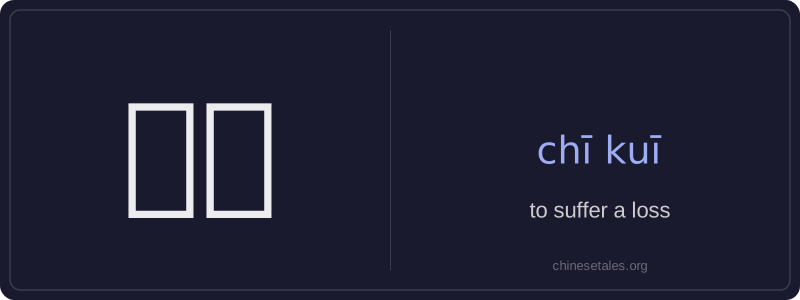
'Chī kuī' literally means 'to eat a loss' — a vivid idiom where 吃 (chī, 'to eat') metaphorically represents experiencing or enduring something unpleasant, and 亏 (kuī, 'loss' or 'deficit') refers to material, emotional, or social disadvantage. Together, the phrase describes suffering an unfair or unfavorable outcome, often due to being deceived, outmaneuvered, or overly accommodating.
It's commonly used in everyday conversation to express regret after a transaction, negotiation, or interpersonal situation where one party gains at your expense — for example, paying too much for an item, accepting blame unjustly, or compromising too readily. While it implies personal disadvantage, it doesn’t necessarily involve financial loss; it can also refer to hurt feelings, damaged reputation, or lost time and energy. The phrase carries a mild tone of self-reproach or caution rather than strong anger.
Example Sentences
Related Words
我的
我的 (wǒ de) is a possessive pronoun meaning 'my'
这么
这么 (zhè me) is an adverb meaning 'so' or 'this
这边
这边 (zhè biān) literally combines 这 (zhè, 'th
中国
‘Zhōngguó’ literally means ‘Middle Kingdom’
中学
'Zhōngxué' literally combines 'zhōng' (middle)
一天
‘一天’ literally combines the numeral ‘一’ (y
一心
‘一心’ literally combines ‘one’ (一) and ‘hea
在家
'Zài jiā' literally combines the preposition 'z