Word Explanation
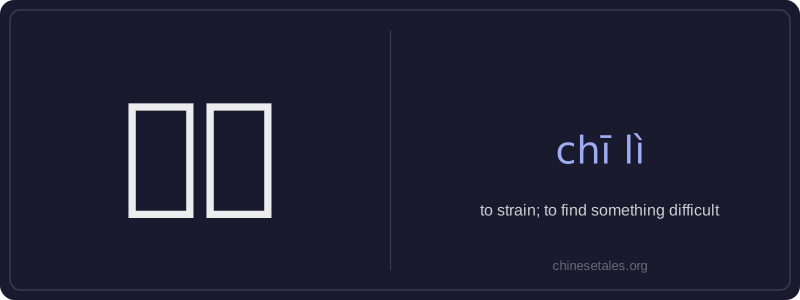
吃力 (chī lì) literally means 'to eat strength'—a vivid idiom suggesting one is expending great physical or mental effort, as if consuming one’s own energy. It describes a state of strain, difficulty, or laboriousness, often implying that a task is beyond one’s current capacity or comfort zone. Unlike verbs like 努力 (nǔlì, 'to strive'), 吃力 is an adjective that modifies nouns or predicates sentences directly (e.g., 这工作很吃力). It carries a neutral-to-slightly-negative connotation and is commonly used in everyday speech to express fatigue, inefficiency, or struggle.
The word appears frequently in contexts involving physical labor (carrying heavy loads), cognitive tasks (understanding complex instructions), or interpersonal challenges (communicating across language barriers). While it can describe temporary difficulty, it rarely implies permanent inability—it focuses on the immediate experience of exertion. Note that 吃力 is not used predicatively with 是 (e.g., ❌‘这是吃力’); instead, it follows degree adverbs like 很, 比较, or 有点.
Example Sentences
Related Words
我的
我的 (wǒ de) is a possessive pronoun meaning 'my'
这么
这么 (zhè me) is an adverb meaning 'so' or 'this
这边
这边 (zhè biān) literally combines 这 (zhè, 'th
中国
‘Zhōngguó’ literally means ‘Middle Kingdom’
中学
'Zhōngxué' literally combines 'zhōng' (middle)
一天
‘一天’ literally combines the numeral ‘一’ (y
一心
‘一心’ literally combines ‘one’ (一) and ‘hea
在家
'Zài jiā' literally combines the preposition 'z