Word Explanation
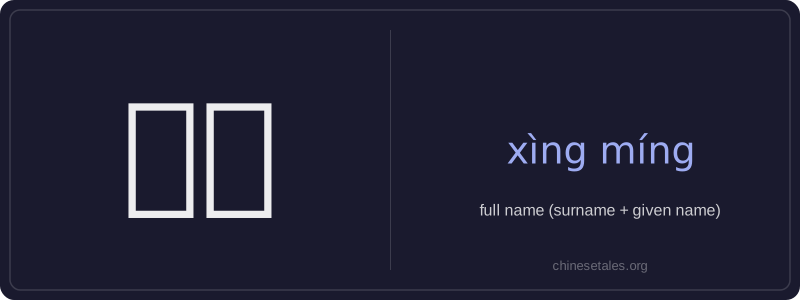
姓名 (xìng míng) is a compound noun meaning 'full name' — specifically the combination of one's family name (surname) and given name. The first character 姓 (xìng) means 'surname' or 'family name', while 名 (míng) means 'given name' or 'personal name'. Together, they form the standard term used in formal and official contexts to refer to a person’s complete name, as opposed to using only the surname or only the given name.
This word appears frequently on forms, identification documents, school rosters, and registration pages — anywhere personal information is collected. Unlike English, where 'name' alone often implies the full name, Chinese distinguishes between 姓 (surname), 名 (given name), and 姓名 (full name) for clarity and formality. It is neutral in register but slightly more formal than just saying 名字 (míngzi), which is more colloquial and general.
Example Sentences
Related Words
我的
我的 (wǒ de) is a possessive pronoun meaning 'my'
这么
这么 (zhè me) is an adverb meaning 'so' or 'this
这边
这边 (zhè biān) literally combines 这 (zhè, 'th
中国
‘Zhōngguó’ literally means ‘Middle Kingdom’
中学
'Zhōngxué' literally combines 'zhōng' (middle)
一天
‘一天’ literally combines the numeral ‘一’ (y
一心
‘一心’ literally combines ‘one’ (一) and ‘hea
在家
'Zài jiā' literally combines the preposition 'z