Word Explanation
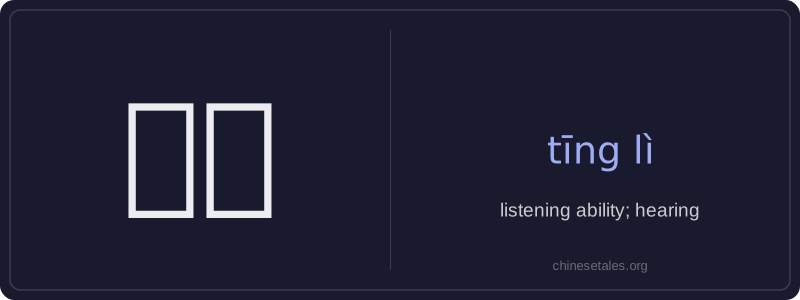
听力 (tīng lì) literally means 'listening power' — combining 听 (tīng), meaning 'to listen', and 力 (lì), meaning 'strength' or 'ability'. It refers to the physiological capacity of the ears to detect sound, as well as the cognitive ability to understand spoken language. In everyday usage, it most often describes a person’s listening comprehension skill, especially in language learning contexts like standardized tests (e.g., HSK listening sections) or classroom instruction.
The term is commonly used in medical, educational, and linguistic settings: doctors assess hearing loss using 听力 tests; teachers design activities to improve students’ 听力; and learners track their progress in understanding native speech. Unlike the general word for 'hearing' (听觉 tīngjué), 听力 emphasizes functional performance — not just detecting sounds, but interpreting meaning accurately and efficiently in real time.
Example Sentences
Related Words
我的
我的 (wǒ de) is a possessive pronoun meaning 'my'
这么
这么 (zhè me) is an adverb meaning 'so' or 'this
这边
这边 (zhè biān) literally combines 这 (zhè, 'th
中国
‘Zhōngguó’ literally means ‘Middle Kingdom’
中学
'Zhōngxué' literally combines 'zhōng' (middle)
一天
‘一天’ literally combines the numeral ‘一’ (y
一心
‘一心’ literally combines ‘one’ (一) and ‘hea
在家
'Zài jiā' literally combines the preposition 'z