Word Explanation
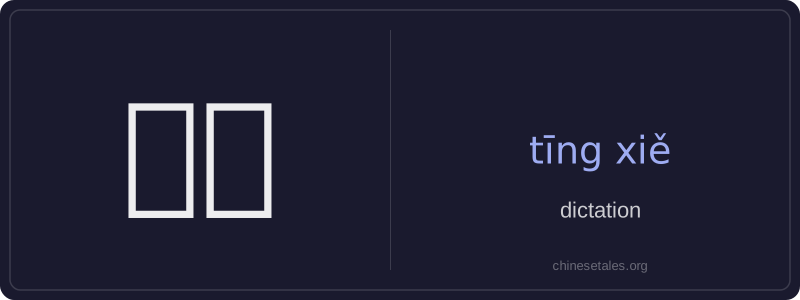
‘听写’ (tīng xiě) literally combines ‘listen’ (听) and ‘write’ (写) to mean the educational activity of dictation—where a speaker reads words or sentences aloud and the listener writes them down. It is a foundational language-learning exercise widely used in Chinese classrooms, especially for mastering character recognition, pronunciation, tone accuracy, and spelling.
This activity emphasizes listening comprehension and handwriting simultaneously, helping learners internalize vocabulary, grammar structures, and orthographic rules. Teachers often use 听写 to assess students’ mastery of new characters or phrases, and it’s common in elementary education, HSK preparation, and heritage language classes. Unlike passive listening, 听写 requires active recall and precise character reproduction, making it a rigorous but effective tool for literacy development.
Example Sentences
Related Words
我的
我的 (wǒ de) is a possessive pronoun meaning 'my'
这么
这么 (zhè me) is an adverb meaning 'so' or 'this
这边
这边 (zhè biān) literally combines 这 (zhè, 'th
中国
‘Zhōngguó’ literally means ‘Middle Kingdom’
中学
'Zhōngxué' literally combines 'zhōng' (middle)
一天
‘一天’ literally combines the numeral ‘一’ (y
一心
‘一心’ literally combines ‘one’ (一) and ‘hea
在家
'Zài jiā' literally combines the preposition 'z