Word Explanation
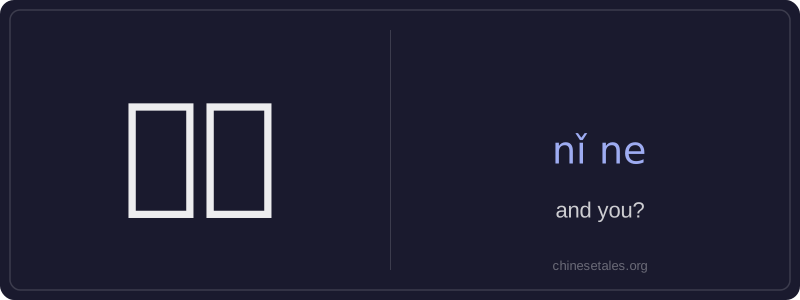
'你呢' is a common conversational phrase meaning 'and you?' or 'what about you?'. It consists of the second-person pronoun 你 (nǐ, 'you') and the sentence-final particle 呢 (ne), which softens the tone and signals continuation or contrast in dialogue. Unlike a full question, it doesn’t require a verb or subject—it’s used to pivot the focus back to the listener after making a statement about oneself or someone else.
This phrase appears frequently in casual spoken Chinese, especially during friendly exchanges about preferences, states, plans, or feelings. It implies shared context: if you say 'I’m tired,' adding '你呢?' invites the other person to share their similar experience. It’s rarely used in formal writing and never stands alone as a complete sentence—it always follows a prior clause or implied topic.
Example Sentences
Related Words
我的
我的 (wǒ de) is a possessive pronoun meaning 'my'
这么
这么 (zhè me) is an adverb meaning 'so' or 'this
这边
这边 (zhè biān) literally combines 这 (zhè, 'th
中国
‘Zhōngguó’ literally means ‘Middle Kingdom’
中学
'Zhōngxué' literally combines 'zhōng' (middle)
一天
‘一天’ literally combines the numeral ‘一’ (y
一心
‘一心’ literally combines ‘one’ (一) and ‘hea
在家
'Zài jiā' literally combines the preposition 'z