Word Explanation
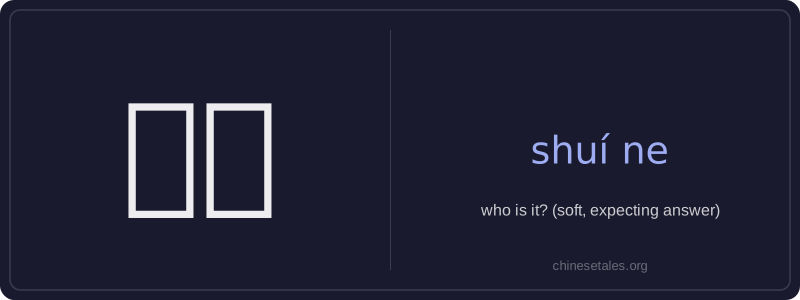
'谁呢' (shuí ne) is a soft, gently inquisitive phrase meaning 'Who is it?' or 'Who’s there?', typically used when someone hears a knock, a voice, or an unexpected sound and wants to identify the person — often at a door or on the phone. The character 谁 means 'who', functioning as an interrogative pronoun, while 呢 adds a light, conversational tone — softening the question, signaling expectation of an answer, and conveying mild curiosity or warmth rather than urgency or suspicion.
This phrase is common in everyday spoken Chinese, especially in informal or familial contexts. It implies the speaker already expects someone familiar or expected — not a stranger or threat — and often carries a friendly, relaxed, or even playful nuance. It’s rarely used in formal writing or official settings, and never stands alone as a complete sentence without context (e.g., it wouldn’t appear in a survey or document). Instead, it appears naturally in dialogue, usually as a short response to auditory cues or as part of a follow-up question after hearing a name or description.
Example Sentences
Related Words
我的
我的 (wǒ de) is a possessive pronoun meaning 'my'
这么
这么 (zhè me) is an adverb meaning 'so' or 'this
这边
这边 (zhè biān) literally combines 这 (zhè, 'th
中国
‘Zhōngguó’ literally means ‘Middle Kingdom’
中学
'Zhōngxué' literally combines 'zhōng' (middle)
见面
见面 literally means 'see face' — combining 见 (t
一天
‘一天’ literally combines the numeral ‘一’ (y
一心
‘一心’ literally combines ‘one’ (一) and ‘hea