Word Explanation
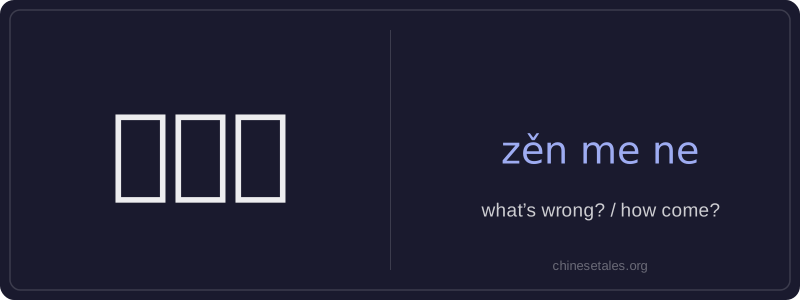
怎么呢 is an informal, spoken interrogative phrase used to express concern, surprise, or gentle inquiry about someone’s state—especially when something seems off or unexpected. Literally, 怎么 means 'how' or 'what', and 呢 is a sentence-final particle that softens tone and invites explanation; together, they form a warm, empathetic question equivalent to 'What’s wrong?' or 'How come?' It is rarely used for factual questions (e.g., about directions or time) but instead signals emotional attunement—often in response to visible cues like silence, frowning, or sudden quiet.
This phrase typically appears at the beginning of a sentence or as a standalone utterance in face-to-face conversation or voice messages. It carries a caring, non-judgmental tone and is common among friends, family, or close colleagues. Unlike formal alternatives, it avoids sounding intrusive by framing concern as open-ended and collaborative: not demanding an answer, but inviting the other person to share at their comfort level.
Example Sentences
Related Words
我的
我的 (wǒ de) is a possessive pronoun meaning 'my'
这么
这么 (zhè me) is an adverb meaning 'so' or 'this
这边
这边 (zhè biān) literally combines 这 (zhè, 'th
中国
‘Zhōngguó’ literally means ‘Middle Kingdom’
中学
'Zhōngxué' literally combines 'zhōng' (middle)
一天
‘一天’ literally combines the numeral ‘一’ (y
一心
‘一心’ literally combines ‘one’ (一) and ‘hea
在家
'Zài jiā' literally combines the preposition 'z