Word Explanation
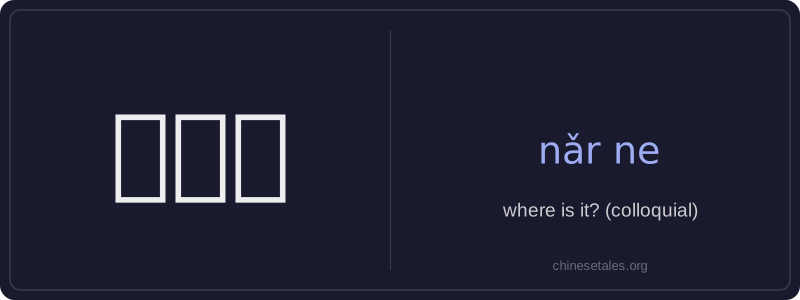
'哪儿呢' (nǎr ne) is a colloquial, contracted form of '在哪里呢' (zài nǎlǐ ne), meaning 'where is it?' or 'where are they?'. It functions as an interrogative pronoun phrase asking about location, and is commonly used in informal spoken Mandarin. The character 哪 means 'which' or 'what', 儿 is a diminutive suffix that softens pronunciation and adds informality (often merged phonetically with 哪 to form nǎr), and 呢 is a sentence-final particle indicating ongoing state or gentle inquiry.
This phrase is typically used when the speaker expects the thing or person to be present but cannot locate them — for example, looking for a lost item, a pet, or someone who was just here. It carries a tone of mild surprise or gentle urgency, and rarely appears in formal writing. Native speakers often drop the verb 'is/are' entirely because context makes it clear — making '哪儿呢' both efficient and very natural in everyday conversation.
Example Sentences
Related Words
我的
我的 (wǒ de) is a possessive pronoun meaning 'my'
这么
这么 (zhè me) is an adverb meaning 'so' or 'this
这边
这边 (zhè biān) literally combines 这 (zhè, 'th
中国
‘Zhōngguó’ literally means ‘Middle Kingdom’
中学
'Zhōngxué' literally combines 'zhōng' (middle)
一天
‘一天’ literally combines the numeral ‘一’ (y
一心
‘一心’ literally combines ‘one’ (一) and ‘hea
在家
'Zài jiā' literally combines the preposition 'z