Word Explanation
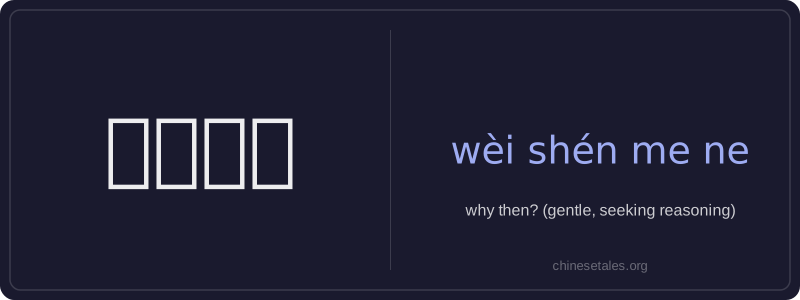
‘为什么呢’ is a gentle, thoughtful question phrase meaning ‘why then?’ or ‘but why?’ It combines the interrogative ‘为什么’ (wèi shén me, ‘why’) with the sentence-final particle ‘呢’ (ne), which softens the tone, adds nuance of curiosity or mild surprise, and invites explanation rather than demanding an answer. Unlike the more direct ‘为什么’, adding ‘呢’ signals that the speaker is reflecting, seeking reasoning, or responding to something previously mentioned — often with empathy, hesitation, or polite skepticism.
This phrase frequently appears in conversational Chinese when expressing gentle doubt, showing concern, or probing for deeper motivation. It’s common in interpersonal contexts — such as parenting, teaching, or friendly dialogue — where maintaining harmony and respect matters. The tone is never confrontational; instead, it conveys openness and willingness to listen. Native speakers use it especially after hearing an unexpected statement or observing behavior they’d like to understand more compassionately.
Example Sentences
Related Words
我的
我的 (wǒ de) is a possessive pronoun meaning 'my'
这么
这么 (zhè me) is an adverb meaning 'so' or 'this
这边
这边 (zhè biān) literally combines 这 (zhè, 'th
中国
‘Zhōngguó’ literally means ‘Middle Kingdom’
中学
'Zhōngxué' literally combines 'zhōng' (middle)
见面
见面 literally means 'see face' — combining 见 (t
一天
‘一天’ literally combines the numeral ‘一’ (y
一心
‘一心’ literally combines ‘one’ (一) and ‘hea