Word Explanation
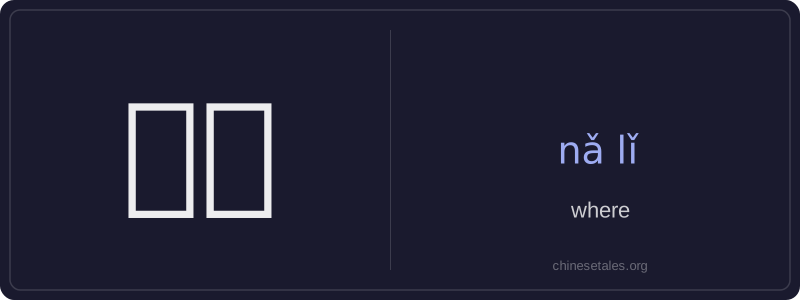
哪里 (nǎ lǐ) is an interrogative pronoun meaning 'where'—used to ask about location or place. The character 哪 (nǎ) means 'which' and functions as a question word, while 里 (lǐ) means 'inside', 'within', or 'in', together forming the concept of 'in which place'. It’s commonly used in questions like 'Where is...?', 'Where are you going?', or 'Where is this located?'
This word appears frequently in daily conversation, travel, directions, and descriptions of physical settings. It can also be used idiomatically in polite responses—for example, when someone thanks you, replying with 哪里 (literally 'where?') means 'It’s nothing' or 'You’re too kind', functioning as a modest, culturally appropriate expression of humility. Though it looks like a noun phrase, its grammatical role is primarily pronominal—it substitutes for a location noun in questions and responses.
Example Sentences
Related Words
我的
我的 (wǒ de) is a possessive pronoun meaning 'my'
这么
这么 (zhè me) is an adverb meaning 'so' or 'this
这边
这边 (zhè biān) literally combines 这 (zhè, 'th
中国
‘Zhōngguó’ literally means ‘Middle Kingdom’
中学
'Zhōngxué' literally combines 'zhōng' (middle)
见面
见面 literally means 'see face' — combining 见 (t
一天
‘一天’ literally combines the numeral ‘一’ (y
一心
‘一心’ literally combines ‘one’ (一) and ‘hea