Word Explanation
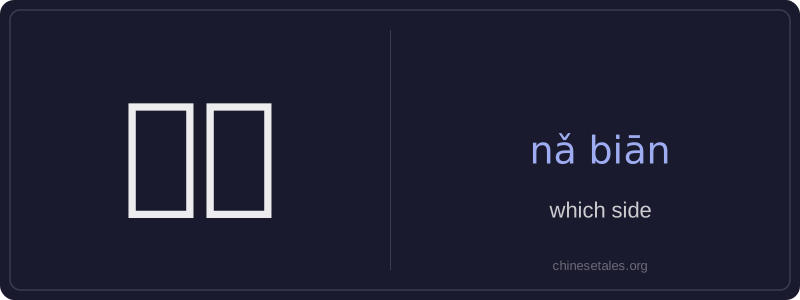
哪边 literally combines 哪 (nǎ), meaning 'which', and 边 (biān), meaning 'side' or 'edge'. Together, 哪边 functions as an interrogative pronoun meaning 'which side' — used to ask about direction, location, or position relative to a reference point. It is neutral in register and commonly heard in spoken and written Chinese when seeking spatial clarification.
This term often appears in questions involving physical orientation — for example, when asking whether something is to the left or right, north or south, inside or outside a space, or closer to one person versus another. Unlike 哪里 (nǎlǐ, 'where'), which asks about general location, 哪边 specifically implies a choice between two or more sides or directions. It can also be used metaphorically in contexts like choosing between options ('Which side do you support?'), though literal spatial use is far more frequent.
Example Sentences
Related Words
我的
我的 (wǒ de) is a possessive pronoun meaning 'my'
这么
这么 (zhè me) is an adverb meaning 'so' or 'this
这边
这边 (zhè biān) literally combines 这 (zhè, 'th
中国
‘Zhōngguó’ literally means ‘Middle Kingdom’
中学
'Zhōngxué' literally combines 'zhōng' (middle)
见面
见面 literally means 'see face' — combining 见 (t
后来
Later (hòulái) is an adverb meaning 'afterwards'
背后
背后 literally means 'back + behind' and functions