Word Explanation
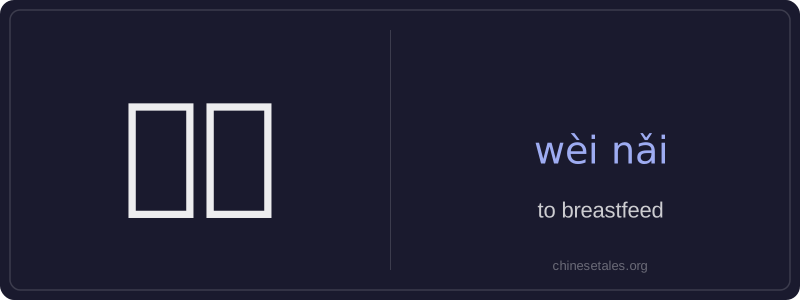
'Wèi nǎi' literally combines 喂 (wèi), meaning 'to feed', and 奶 (nǎi), meaning 'milk'. Together, it specifically refers to the act of breastfeeding — feeding a baby with milk directly from the mother's breast. It is not used for bottle-feeding or feeding animals unless in very informal or metaphorical contexts.
This verb is commonly used in health, parenting, and daily life discussions in Chinese. It often appears in advice about infant care, maternal health, or family routines. The term carries a warm, nurturing connotation and is generally neutral to formal in register — appropriate in medical consultations, parenting books, and casual conversation among caregivers. It is rarely used transitively with an explicit object (e.g., you wouldn’t say *wèi nǎi tā*); instead, context usually makes the baby clear, or you specify using 喂宝宝奶 (wèi bǎobao nǎi) — 'feed the baby milk'.
Example Sentences
Related Words
我的
我的 (wǒ de) is a possessive pronoun meaning 'my'
这么
这么 (zhè me) is an adverb meaning 'so' or 'this
这边
这边 (zhè biān) literally combines 这 (zhè, 'th
中国
‘Zhōngguó’ literally means ‘Middle Kingdom’
中学
'Zhōngxué' literally combines 'zhōng' (middle)
见面
见面 literally means 'see face' — combining 见 (t
后来
Later (hòulái) is an adverb meaning 'afterwards'
背后
背后 literally means 'back + behind' and functions