Word Explanation
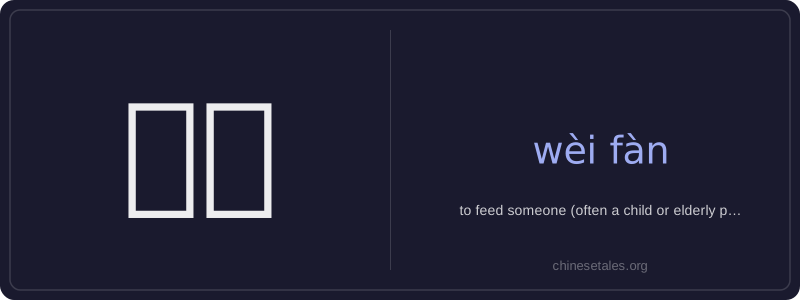
‘喂饭’ is a compound verb meaning 'to feed someone'—typically a child, elderly person, or someone unable to eat independently due to illness, disability, or age. The first character 喂 (wèi) means 'to feed' or 'to give food to', and the second character 饭 (fàn) literally means 'cooked rice' or more broadly 'a meal'. Together, they form an action-oriented phrase emphasizing the physical act of placing food into another person’s mouth or guiding them through eating.
This term carries warm, caring connotations but can also imply dependency or vulnerability, depending on context. It’s commonly used in family settings, caregiving, or medical contexts—for example, parents feeding toddlers, adult children assisting aging parents, or nurses supporting patients recovering from surgery. It is not used for self-feeding or casual sharing of food; it specifically denotes direct, hands-on assistance with eating.
Example Sentences
Related Words
我的
我的 (wǒ de) is a possessive pronoun meaning 'my'
这么
这么 (zhè me) is an adverb meaning 'so' or 'this
这边
这边 (zhè biān) literally combines 这 (zhè, 'th
中国
‘Zhōngguó’ literally means ‘Middle Kingdom’
中学
'Zhōngxué' literally combines 'zhōng' (middle)
见面
见面 literally means 'see face' — combining 见 (t
后来
Later (hòulái) is an adverb meaning 'afterwards'
背后
背后 literally means 'back + behind' and functions