Word Explanation
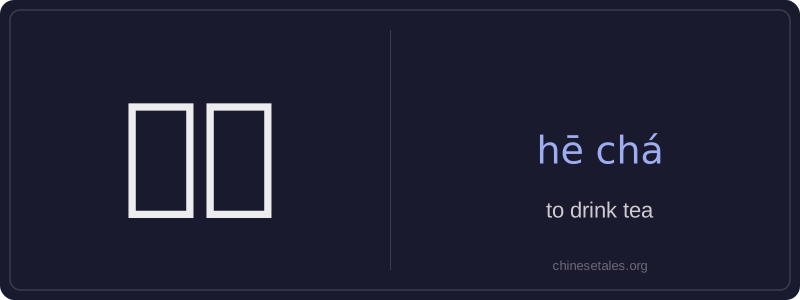
'Hē chá' literally means 'drink tea'—a compound verb formed by the action verb 喝 (hē, 'to drink') and the noun 茶 (chá, 'tea'). Unlike English, where 'drink tea' is a verb + noun phrase, in Chinese this combination functions as a single verbal unit expressing a common daily activity. It’s not just about consuming tea; it often carries cultural connotations of relaxation, hospitality, or social bonding.
The phrase appears frequently in invitations ('Come over and hē chá!'), descriptions of routines ('I hē chá every morning'), and even metaphorically to suggest taking a break or engaging in light conversation. While it can refer literally to drinking any kind of tea—including green, oolong, or pu’er—it is rarely used for herbal infusions like chrysanthemum tea (which would be 喝菊花茶). The verb 喝 governs other beverages too (e.g., 喝水 hē shuǐ 'drink water'), but 喝茶 stands out as a culturally fixed expression.
Example Sentences
Related Words
我的
我的 (wǒ de) is a possessive pronoun meaning 'my'
这么
这么 (zhè me) is an adverb meaning 'so' or 'this
这边
这边 (zhè biān) literally combines 这 (zhè, 'th
中国
‘Zhōngguó’ literally means ‘Middle Kingdom’
中学
'Zhōngxué' literally combines 'zhōng' (middle)
见面
见面 literally means 'see face' — combining 见 (t
后来
Later (hòulái) is an adverb meaning 'afterwards'
背后
背后 literally means 'back + behind' and functions