Word Explanation
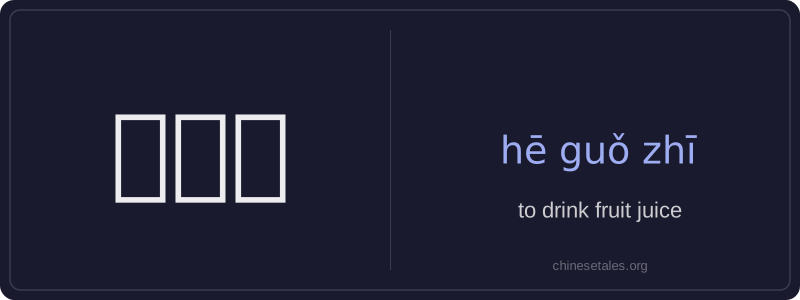
'Hē guǒ zhī' literally combines three characters: 喝 (hē) meaning 'to drink', 果 (guǒ) meaning 'fruit', and 汁 (zhī) meaning 'juice'. Together, it forms a verb phrase meaning 'to drink fruit juice' — a common daily action associated with hydration, nutrition, or refreshment. It follows the standard Chinese verb–object structure, where the verb comes first and the noun object follows directly, without particles like 'le' or 'guo' unless indicating aspect.
This phrase is neutral in register and widely used across ages and contexts — from parents encouraging children to drink juice for vitamins, to adults ordering at cafés or preparing breakfast. It’s often paired with time expressions ('every morning'), frequency adverbs ('often'), or objects specifying the type of juice ('apple juice', 'orange juice'). Unlike English, Chinese doesn’t require an article before 'guǒ zhī', and the phrase itself cannot function as a noun (e.g., you can’t say 'I like hē guǒ zhī' — instead, use 'hē guǒ zhī' as a verb or nominalize with 'hē guǒ zhī de xíguàn' for 'the habit of drinking fruit juice').
Example Sentences
Related Words
我的
我的 (wǒ de) is a possessive pronoun meaning 'my'
这么
这么 (zhè me) is an adverb meaning 'so' or 'this
这边
这边 (zhè biān) literally combines 这 (zhè, 'th
中国
‘Zhōngguó’ literally means ‘Middle Kingdom’
中学
'Zhōngxué' literally combines 'zhōng' (middle)
见面
见面 literally means 'see face' — combining 见 (t
后来
Later (hòulái) is an adverb meaning 'afterwards'
背后
背后 literally means 'back + behind' and functions