Word Explanation
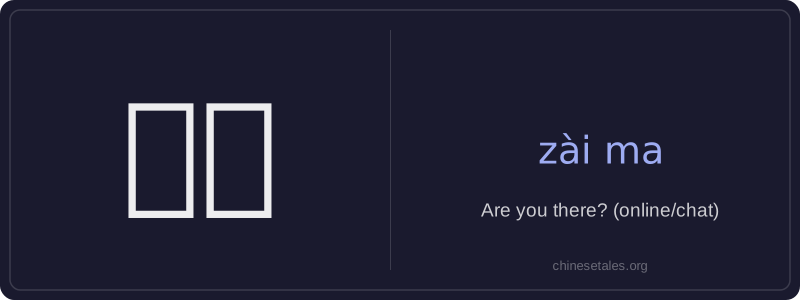
'在吗' (zài ma) is a common, informal interjection used almost exclusively in digital communication — such as instant messaging, social media chats, or online forums — to ask 'Are you there?' or 'Are you available to chat?'. Literally, 在 (zài) means 'to be (at a place)' or 'to exist', and 吗 (ma) is a question particle that turns any statement into a yes/no question. Together, they form a concise, context-dependent inquiry about the recipient’s immediate online presence or readiness to respond — not about physical location.
This phrase reflects the efficiency and immediacy of modern Chinese online interaction. It carries no formality or politeness markers, so it’s appropriate only with friends, family, or peers; using it with teachers, bosses, or elders would sound abrupt or rude. It often appears at the start of a message, sometimes followed by a pause or emoji, and rarely stands alone in formal writing or speech.
Example Sentences
Related Words
我的
我的 (wǒ de) is a possessive pronoun meaning 'my'
这么
这么 (zhè me) is an adverb meaning 'so' or 'this
这边
这边 (zhè biān) literally combines 这 (zhè, 'th
中国
‘Zhōngguó’ literally means ‘Middle Kingdom’
中学
'Zhōngxué' literally combines 'zhōng' (middle)
见面
见面 literally means 'see face' — combining 见 (t
后来
Later (hòulái) is an adverb meaning 'afterwards'
背后
背后 literally means 'back + behind' and functions