Word Explanation
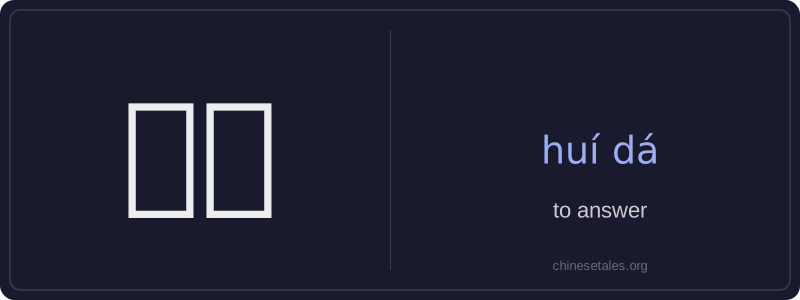
回答 (huí dá) is a verb meaning 'to answer' — specifically, to give a verbal or written reply to a question, request, or statement. The character 回 (huí) literally means 'to return' or 'to go back', and 答 (dá) means 'to reply'. Together, they evoke the idea of 'returning' a response — sending back words in reaction to what was asked. It’s used in both formal and informal contexts, though it tends to sound slightly more neutral or standard than colloquial alternatives like '答' alone or '说'.
This word commonly appears in academic, professional, and everyday situations: answering exam questions, responding to emails, replying during conversations, or fulfilling requests. It can take objects directly (e.g., 回答问题) and often follows subjects indicating who is answering. Unlike some verbs, 回答 doesn’t require aspect particles like 了 or 过 unless indicating completion or experience — context usually makes that clear.
Example Sentences
Related Words
我的
我的 (wǒ de) is a possessive pronoun meaning 'my'
这么
这么 (zhè me) is an adverb meaning 'so' or 'this
这边
这边 (zhè biān) literally combines 这 (zhè, 'th
中国
‘Zhōngguó’ literally means ‘Middle Kingdom’
中学
'Zhōngxué' literally combines 'zhōng' (middle)
见面
见面 literally means 'see face' — combining 见 (t
后来
Later (hòulái) is an adverb meaning 'afterwards'
背后
背后 literally means 'back + behind' and functions