Word Explanation
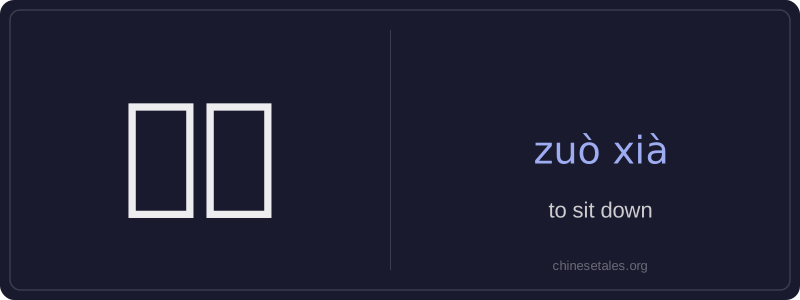
'坐下' (zuò xià) is a separable verb meaning 'to sit down' — literally 'sit' + 'down'. The character 坐 means 'to sit' and functions as the main verb, while 下 indicates direction or completion, emphasizing the downward motion of taking a seated position. Unlike English, this compound is almost always used as an imperative or in commands and suggestions ('Please sit down'), but it also appears in narrative contexts to describe the action itself.
It's commonly used in everyday situations: in classrooms, restaurants, meetings, or at home. While 坐 alone can mean 'to sit', adding 下 makes the action more specific, intentional, and complete — implying transition from standing to sitting. It’s neutral in register, appropriate for both formal and informal settings, and frequently paired with polite particles like 吧 or 请. Note that it cannot be reduplicated (e.g., *坐坐下) and doesn’t take aspect markers like 了 directly after 下 without restructuring (e.g., 坐下来了).
Example Sentences
Related Words
我的
我的 (wǒ de) is a possessive pronoun meaning 'my'
这么
这么 (zhè me) is an adverb meaning 'so' or 'this
这边
这边 (zhè biān) literally combines 这 (zhè, 'th
中国
‘Zhōngguó’ literally means ‘Middle Kingdom’
中学
'Zhōngxué' literally combines 'zhōng' (middle)
见面
见面 literally means 'see face' — combining 见 (t
后来
Later (hòulái) is an adverb meaning 'afterwards'
背后
背后 literally means 'back + behind' and functions