Word Explanation
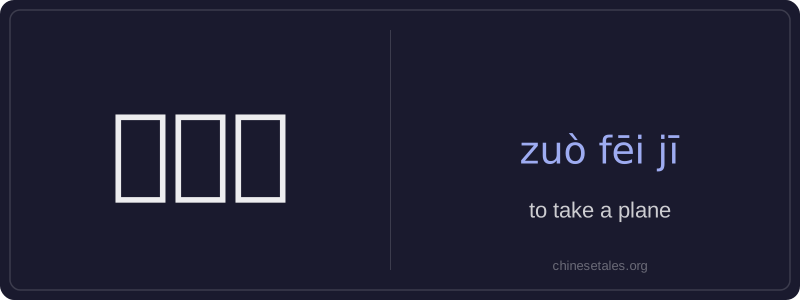
'Zuò fēi jī' literally means 'to sit on a flying machine' — a transparent compound where 坐 (zuò) is the verb 'to sit' or 'to take (transportation)', 飞 (fēi) means 'to fly', and 机 (jī) means 'machine' or 'device'. Together, they form a common, colloquial verb meaning 'to take a plane' or 'to fly (by airplane)'. It’s not used for helicopters or drones; it specifically refers to commercial or private fixed-wing aircraft travel.
This phrase is frequently used in daily conversation when discussing travel plans, schedules, or past experiences. Unlike formal alternatives like 乘飞机 (chéng fēi jī), 坐飞机 is neutral and widely preferred in spoken Mandarin. It often appears with time expressions (e.g., 明天, 上周), destinations (e.g., 去北京, 到纽约), or modals like 要, 会, or 已经. The verb can be reduplicated as 坐坐飞机 for a casual, 'try it out' nuance, though this is rare.
Example Sentences
Related Words
我的
我的 (wǒ de) is a possessive pronoun meaning 'my'
这么
这么 (zhè me) is an adverb meaning 'so' or 'this
这边
这边 (zhè biān) literally combines 这 (zhè, 'th
中国
‘Zhōngguó’ literally means ‘Middle Kingdom’
中学
'Zhōngxué' literally combines 'zhōng' (middle)
见面
见面 literally means 'see face' — combining 见 (t
后来
Later (hòulái) is an adverb meaning 'afterwards'
背后
背后 literally means 'back + behind' and functions