Word Explanation
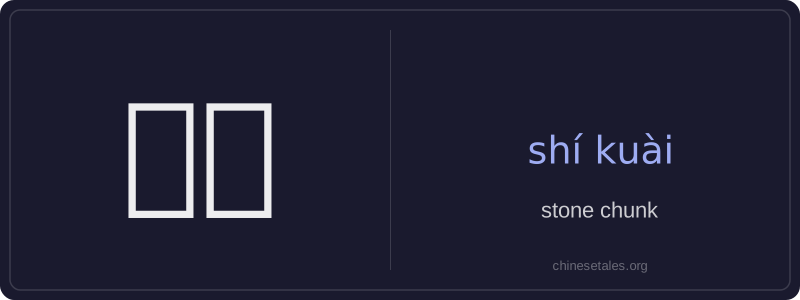
石块 (shí kuài) literally combines 石 (shí), meaning 'stone' or 'rock', and 块 (kuài), a common measure word for solid, chunk-like objects. Together, it refers to a medium-sized, irregularly shaped piece of stone — larger than a pebble but smaller than a boulder. It emphasizes physical mass and solidity, often implying natural origin and rough texture.
This noun is frequently used in everyday contexts involving terrain, construction, or outdoor activities — for example, describing stones scattered on a path, used in garden landscaping, or found in riverbeds. Unlike the more technical term 岩石 (yánshí, 'rock') or the poetic 岩 (yán, 'cliff'), 石块 carries a neutral, concrete, and slightly informal tone. It appears commonly in descriptive writing, safety warnings (e.g., 'watch for loose stone chunks'), and children’s stories about nature or building.
Example Sentences
Related Words
我的
我的 (wǒ de) is a possessive pronoun meaning 'my'
这么
这么 (zhè me) is an adverb meaning 'so' or 'this
这边
这边 (zhè biān) literally combines 这 (zhè, 'th
中国
‘Zhōngguó’ literally means ‘Middle Kingdom’
中学
'Zhōngxué' literally combines 'zhōng' (middle)
见面
见面 literally means 'see face' — combining 见 (t
后来
Later (hòulái) is an adverb meaning 'afterwards'
背后
背后 literally means 'back + behind' and functions