Word Explanation
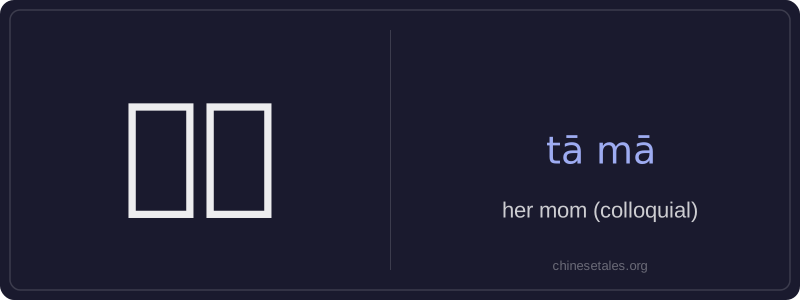
‘她妈’ (tā mā) is a colloquial, informal noun meaning ‘her mom’ or ‘her mother’. It literally combines the third-person feminine pronoun 她 (tā, ‘she’) and the kinship term 妈 (mā, ‘mom’), forming a possessive compound without any grammatical particle like 的. Unlike formal written Chinese, which typically uses 她的妈妈 (tā de māma), this two-character form is common in spoken Mandarin—especially in casual conversation, storytelling, or dialogue where brevity and natural rhythm matter.
This expression carries no inherent tone of disrespect, but its informality means it’s rarely used in formal writing, official documents, or respectful address. It often appears in reported speech, anecdotes, or when narrating someone else’s perspective: e.g., describing what ‘she’ said, did, or thought about her mother. Learners should note that while grammatically simple, its register is distinctly conversational—not neutral—and may sound overly blunt if misapplied in polite or professional contexts.
Example Sentences
Related Words
我的
我的 (wǒ de) is a possessive pronoun meaning 'my'
这么
这么 (zhè me) is an adverb meaning 'so' or 'this
这边
这边 (zhè biān) literally combines 这 (zhè, 'th
中国
‘Zhōngguó’ literally means ‘Middle Kingdom’
中学
'Zhōngxué' literally combines 'zhōng' (middle)
见面
见面 literally means 'see face' — combining 见 (t
后来
Later (hòulái) is an adverb meaning 'afterwards'
背后
背后 literally means 'back + behind' and functions