Word Explanation
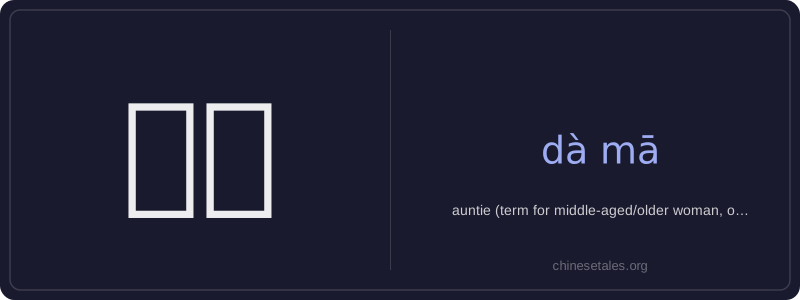
‘Dàmā’ (大妈) literally combines ‘dà’ (大), meaning ‘big’ or ‘elder’, and ‘mā’ (妈), meaning ‘mom’ or ‘mother’. Though it looks like ‘big mom’, it’s not used for one’s actual mother—it’s a respectful, slightly affectionate term for an older woman, typically middle-aged or elderly, often a neighbor, community member, or family friend. It conveys warmth and familiarity without implying blood relation.
The term is commonly heard in everyday neighborhood interactions, residential compounds, parks, and markets—especially when addressing women who are active in community life, such as those organizing square dancing, managing building affairs, or giving informal advice. While neutral and friendly in most contexts, tone and context matter: used with a smile and polite intonation, it’s warm; used sarcastically or in isolation, it can carry light stereotyping (e.g., referencing the ‘dàmā’ phenomenon in finance or public behavior). It reflects Chinese cultural norms of relational address and age-based respect.
Example Sentences
Related Words
我的
我的 (wǒ de) is a possessive pronoun meaning 'my'
这么
这么 (zhè me) is an adverb meaning 'so' or 'this
中学
'Zhōngxué' literally combines 'zhōng' (middle)
这边
这边 (zhè biān) literally combines 这 (zhè, 'th
中国
‘Zhōngguó’ literally means ‘Middle Kingdom’
见面
见面 literally means 'see face' — combining 见 (t
后来
Later (hòulái) is an adverb meaning 'afterwards'
背后
背后 literally means 'back + behind' and functions