Word Explanation
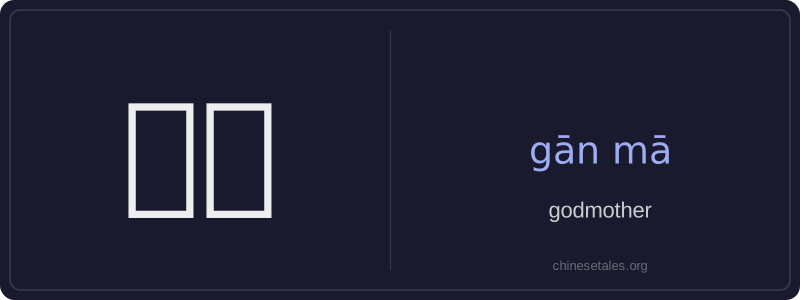
‘干妈’ (gān mā) literally combines ‘干’ (gān), meaning ‘fictive’ or ‘ritual’, and ‘妈’ (mā), meaning ‘mother’. It refers to a woman who has formally or informally adopted someone as her godchild—often through a ceremonial ‘dry adoption’ (gān qīn) that establishes a respectful, affectionate, non-biological kinship bond. Unlike legal adoption, this relationship is social and symbolic, commonly formed between families with close ties, or to honor a mentor, family friend, or elder.
This term reflects Chinese cultural values of extended family networks and reciprocal respect: the godmother often gives guidance, gifts (especially during festivals), or support, while the godchild shows filial courtesy—such as addressing her as ‘gān mā’, giving her birthday presents, or visiting during holidays. It’s used across generations and regions, though more frequently in southern China and among older speakers; younger urban Chinese may use it less formally or even jokingly for beloved older women.
Example Sentences
Related Words
我的
我的 (wǒ de) is a possessive pronoun meaning 'my'
这么
这么 (zhè me) is an adverb meaning 'so' or 'this
中学
'Zhōngxué' literally combines 'zhōng' (middle)
这边
这边 (zhè biān) literally combines 这 (zhè, 'th
中国
‘Zhōngguó’ literally means ‘Middle Kingdom’
见面
见面 literally means 'see face' — combining 见 (t
后来
Later (hòulái) is an adverb meaning 'afterwards'
背后
背后 literally means 'back + behind' and functions