Word Explanation
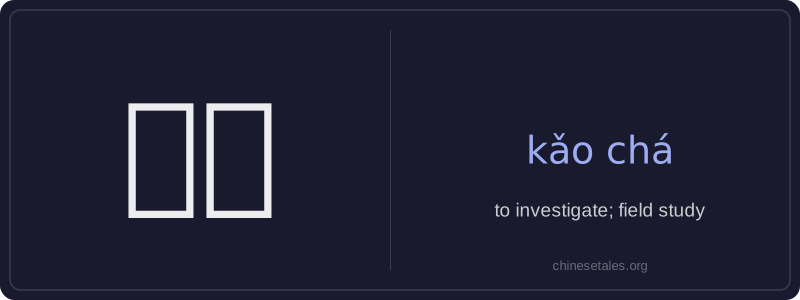
‘考察’ (kǎo chá) is a formal verb meaning ‘to investigate’, ‘to conduct a field study’, or ‘to inspect on-site’. It combines two characters: 考 (kǎo), meaning ‘to examine’ or ‘to test’, and 察 (chá), meaning ‘to observe carefully’ or ‘to survey’. Together, they emphasize thorough, firsthand observation—often involving travel to a location to gather information, assess conditions, or evaluate feasibility. Unlike casual observation, 考察 implies purpose, method, and professional or academic intent.
This word is commonly used in contexts such as scientific research, urban planning, environmental studies, education, and business development. It frequently appears in official reports, news articles, and academic writing. While it can be used transitively (e.g., 考察一个地区), it’s also often followed by prepositions like ‘到’ (e.g., 考察到云南) or ‘后’ (e.g., 考察后决定). It is not used for everyday curiosity—it carries weight and intentionality.
Example Sentences
Related Words
见面
见面 literally means 'see face' — combining 见 (t
背后
背后 literally means 'back + behind' and functions
中学
'Zhōngxué' literally combines 'zhōng' (middle)
面条
‘面条’ (miàn tiáo) literally means ‘flour str
后来
Later (hòulái) is an adverb meaning 'afterwards'
我的
我的 (wǒ de) is a possessive pronoun meaning 'my'
不对
不对 (bù duì) literally combines 不 (bù), meani
这么
这么 (zhè me) is an adverb meaning 'so' or 'this