Word Explanation
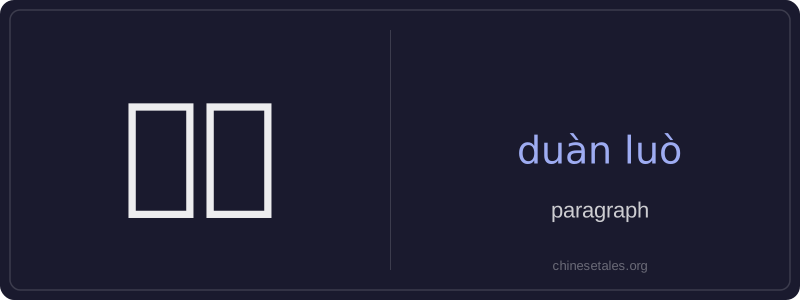
段落 (duàn luò) means 'paragraph' — a distinct section of written text that develops a single idea or topic. The character 段 (duàn) literally means 'section', 'segment', or 'portion', often used for divisions in time, space, or content (e.g., 一段话 'a segment of speech'). The character 落 (luò) here functions phonetically and historically contributes to the compound’s meaning of 'a settled, complete unit'; it does not carry its common meaning of 'to fall' or 'to settle' in this context. Together, 段落 refers specifically to a self-contained block of writing bounded by line breaks or indentation.
This word is used across academic, journalistic, literary, and everyday writing contexts — from school essays to news articles and digital posts. Unlike English, Chinese rarely uses paragraph numbers or formal labels; instead, 段落 signals logical organization and readability. It's neutral in register and appropriate in both formal and informal written communication, though it seldom appears in spoken conversation unless discussing writing itself.
Example Sentences
Related Words
背后
背后 literally means 'back + behind' and functions
不对
不对 (bù duì) literally combines 不 (bù), meani
中学
'Zhōngxué' literally combines 'zhōng' (middle)
见面
见面 literally means 'see face' — combining 见 (t
面条
‘面条’ (miàn tiáo) literally means ‘flour str
我的
我的 (wǒ de) is a possessive pronoun meaning 'my'
后来
Later (hòulái) is an adverb meaning 'afterwards'
认同
‘认同’ (tóng rèn) is a verb meaning ‘to ident