Word Explanation
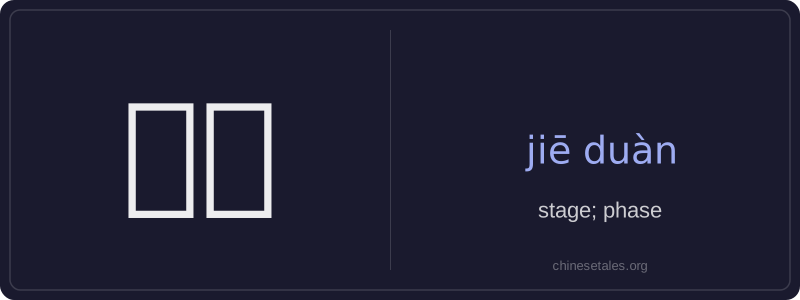
阶段 (jiē duàn) literally combines 阶 (jiē), meaning 'step' or 'tier', and 段 (duàn), meaning 'section' or 'segment'. Together, they form a noun meaning 'stage' or 'phase'—a distinct period within a longer process or development. It emphasizes progression and division: just as stairs have individual steps (阶) and a road has segments (段), life, learning, projects, or natural phenomena unfold in identifiable stages.
This word is widely used in formal and neutral contexts—education (e.g., 'primary school stage'), project management ('development stage'), biology ('larval stage'), or personal growth ('adolescent stage'). It’s countable and often modified by measure words like 个 or specific classifiers like 一 (yī), and commonly appears with time-related verbs like 进入 (enter), 完成 (complete), or 处于 (be in). Unlike the more colloquial 时候 (shíhou) or 时期 (shíqī), 阶段 carries a sense of structured, sequential progression.
Example Sentences
Related Words
背后
背后 literally means 'back + behind' and functions
不对
不对 (bù duì) literally combines 不 (bù), meani
中学
'Zhōngxué' literally combines 'zhōng' (middle)
见面
见面 literally means 'see face' — combining 见 (t
面条
‘面条’ (miàn tiáo) literally means ‘flour str
我的
我的 (wǒ de) is a possessive pronoun meaning 'my'
后来
Later (hòulái) is an adverb meaning 'afterwards'
认同
‘认同’ (tóng rèn) is a verb meaning ‘to ident