Word Explanation
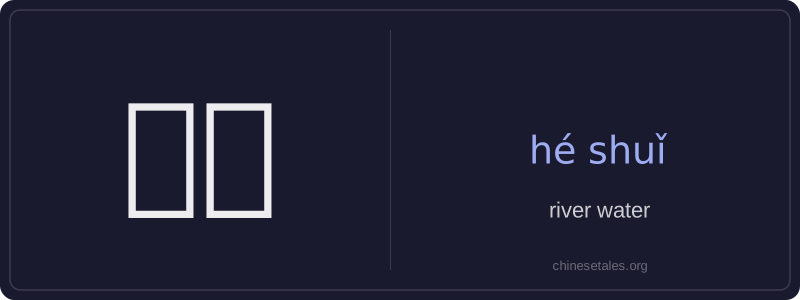
‘Hé shuǐ’ literally means ‘river water’ — it combines 河 (hé), meaning ‘river’, and 水 (shuǐ), meaning ‘water’. Together, they refer specifically to the water flowing in a river, not just any water or generic river-related concepts. This term emphasizes the physical substance — the liquid itself — rather than the river as a geographical feature (which is simply 河). It’s commonly used in environmental, scientific, or descriptive contexts, such as discussing water quality, seasonal changes, or natural scenery.
You’ll hear ‘hé shuǐ’ in phrases like ‘河水清澈’ (the river water is clear) or ‘河水上涨’ (the river water is rising). Unlike compound words that may be abstract or metaphorical, 河水 is concrete and literal: it always denotes actual water found in rivers. It’s neutral in register — appropriate in both spoken and written Chinese — and rarely appears alone without modifiers or context, since speakers usually specify *which* river’s water or *what about* the water (e.g., its temperature, color, or level).
Example Sentences
Related Words
背后
背后 literally means 'back + behind' and functions
不对
不对 (bù duì) literally combines 不 (bù), meani
中学
'Zhōngxué' literally combines 'zhōng' (middle)
见面
见面 literally means 'see face' — combining 见 (t
面条
‘面条’ (miàn tiáo) literally means ‘flour str
我的
我的 (wǒ de) is a possessive pronoun meaning 'my'
后来
Later (hòulái) is an adverb meaning 'afterwards'
认同
‘认同’ (tóng rèn) is a verb meaning ‘to ident