Word Explanation
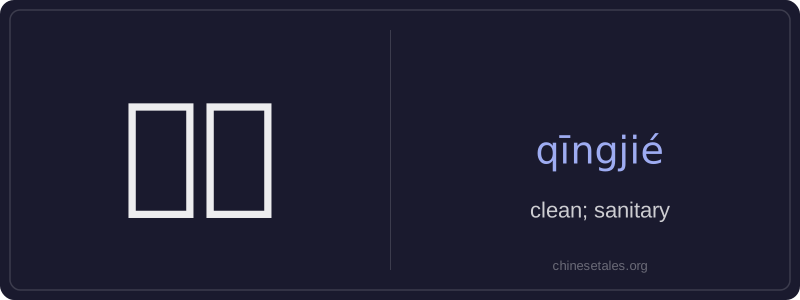
清洁 (qīngjié) is an adjective meaning 'clean' or 'sanitary,' emphasizing the absence of dirt, germs, or impurities. It combines 清 (qīng), meaning 'clear' or 'pure,' and 洁 (jié), meaning 'clean' or 'spotless' — together they reinforce a high standard of hygiene and purity. Unlike the more general word 干净 (gānjìng), which can describe physical neatness in everyday contexts, 清洁 often appears in formal, medical, or institutional settings — such as hospital protocols, food safety standards, or public health campaigns.
This word is commonly used to describe environments (e.g., operating rooms, kitchens), objects (e.g., surgical tools, baby bottles), or practices (e.g., hand-washing routines). It frequently appears in compound nouns like 清洁工 (qīngjié gōng, 'cleaner') or 清洁剂 (qīngjié jì, 'detergent'), but as an adjective, it typically modifies nouns directly (e.g., 清洁的水源, 'clean water source'). It carries a connotation of thoroughness and health-consciousness rather than mere visual tidiness.
Example Sentences
Related Words
背后
背后 literally means 'back + behind' and functions
不对
不对 (bù duì) literally combines 不 (bù), meani
中学
'Zhōngxué' literally combines 'zhōng' (middle)
见面
见面 literally means 'see face' — combining 见 (t
面条
‘面条’ (miàn tiáo) literally means ‘flour str
我的
我的 (wǒ de) is a possessive pronoun meaning 'my'
后来
Later (hòulái) is an adverb meaning 'afterwards'
认同
‘认同’ (tóng rèn) is a verb meaning ‘to ident