Word Explanation
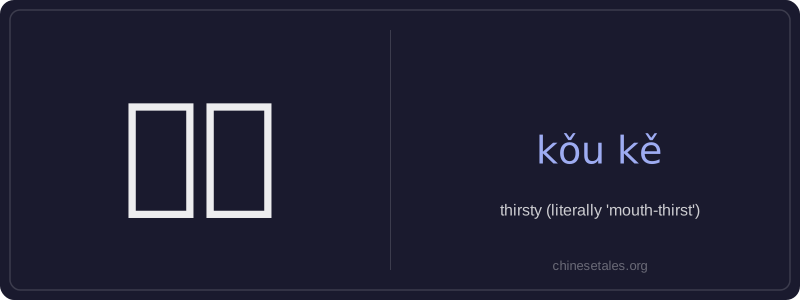
‘口渴’ literally means 'mouth-thirst' and functions as an adjective meaning 'thirsty'. The first character 口 (kǒu) means 'mouth', representing the physical sensation felt in the mouth, while 渴 (kě) means 'to thirst' or 'thirsty'—a standalone word that already carries the core meaning. Together, they form a common, slightly formal or literary compound used to describe the physiological state of needing water. It’s more frequently used in written Chinese, health-related contexts, or polite speech than in casual spoken language, where people often say 我渴了 (wǒ kě le) instead.
This term appears in medical instructions, public health notices (e.g., 'Drink water when you feel 口渴'), and descriptions of symptoms. Unlike English 'thirsty', which can be used metaphorically (e.g., 'thirsty for knowledge'), 口渴 is almost exclusively literal and physiological—it does not extend to abstract desires. It’s also commonly paired with verbs like 感到 (gǎn dào, 'to feel') or 出现 (chū xiàn, 'to appear') in formal or descriptive writing.
Example Sentences
Related Words
背后
背后 literally means 'back + behind' and functions
不对
不对 (bù duì) literally combines 不 (bù), meani
中学
'Zhōngxué' literally combines 'zhōng' (middle)
见面
见面 literally means 'see face' — combining 见 (t
面条
‘面条’ (miàn tiáo) literally means ‘flour str
我的
我的 (wǒ de) is a possessive pronoun meaning 'my'
后来
Later (hòulái) is an adverb meaning 'afterwards'
认同
‘认同’ (tóng rèn) is a verb meaning ‘to ident