Word Explanation
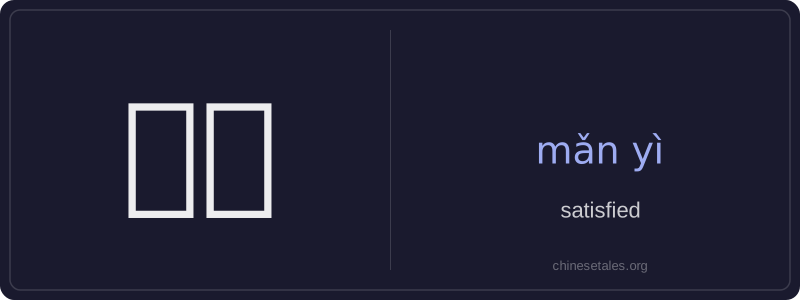
满意 (mǎn yì) is an adjective meaning 'satisfied' or 'contented'. It combines 满 (mǎn), which means 'full' or 'complete', and 意 (yì), meaning 'intention', 'mind', or 'wish'. Literally, it suggests a state where one’s expectations or wishes are fully fulfilled — the mind is 'full' of satisfaction. It describes a positive emotional response to a result, service, product, or outcome that meets or exceeds expectations.
This word is commonly used in everyday contexts: customer feedback ('我对这顿饭很满意'), academic performance ('老师对他的作业很满意'), or personal achievements ('她对自己的进步很满意'). It typically follows the subject and precedes the verb 是 or a complement like 很, 非常, or 不. While it can occasionally function as a verb in formal or literary contexts (e.g., '他满意地笑了'), its primary and most frequent role is as a predicate adjective after 是 or with degree adverbs.
Example Sentences
Related Words
背后
背后 literally means 'back + behind' and functions
不对
不对 (bù duì) literally combines 不 (bù), meani
中学
'Zhōngxué' literally combines 'zhōng' (middle)
见面
见面 literally means 'see face' — combining 见 (t
面条
‘面条’ (miàn tiáo) literally means ‘flour str
我的
我的 (wǒ de) is a possessive pronoun meaning 'my'
后来
Later (hòulái) is an adverb meaning 'afterwards'
认同
‘认同’ (tóng rèn) is a verb meaning ‘to ident