Word Explanation
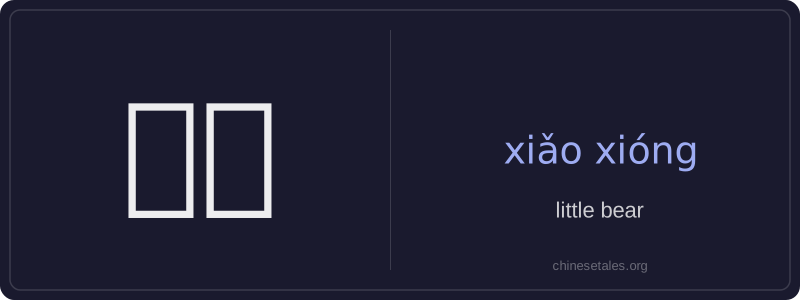
‘Xiǎo xióng’ literally means ‘small bear’ and functions as a noun referring to a young bear, a teddy bear, or any bear-like creature depicted in a cute or diminutive way. The first character 小 (xiǎo) means ‘small’ or ‘little’, conveying size, youth, or endearment; the second character 熊 (xióng) means ‘bear’. Together, they form a compound noun that emphasizes cuteness, innocence, or familiarity — much like English terms such as ‘teddy bear’ or ‘cub’ depending on context.
This term is commonly used in children’s books, toys, branding (e.g., cartoon mascots), and affectionate nicknames. While it can refer literally to a bear cub in zoology or wildlife contexts, its most frequent usage is playful or sentimental rather than scientific. It rarely appears in formal or technical writing about animals, where terms like 幼熊 (yòu xióng, ‘juvenile bear’) are preferred.
Example Sentences
Related Words
背后
背后 literally means 'back + behind' and functions
认同
‘认同’ (tóng rèn) is a verb meaning ‘to ident
不对
不对 (bù duì) literally combines 不 (bù), meani
中学
'Zhōngxué' literally combines 'zhōng' (middle)
见面
见面 literally means 'see face' — combining 见 (t
面条
‘面条’ (miàn tiáo) literally means ‘flour str
外语
‘外语’ literally means ‘outside language’ —
无论谁
‘无论谁’ (wú lùn shéi) is a pronoun meaning