Word Explanation
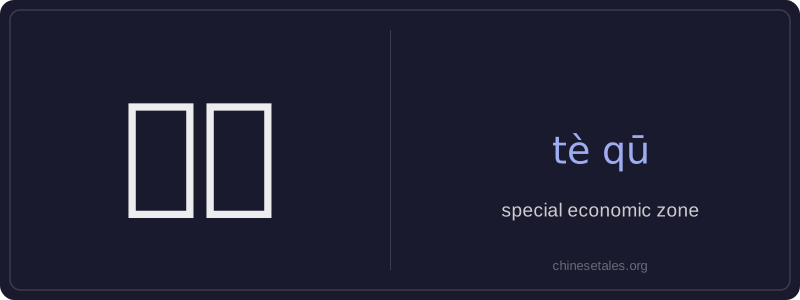
‘特区’ (tè qū) literally means ‘special zone’ — ‘特’ (tè) means ‘special’ or ‘distinctive’, and ‘区’ (qū) means ‘area’, ‘zone’, or ‘district’. Together, the term specifically refers to China’s Special Economic Zones: designated areas with preferential economic policies, such as tax incentives, foreign investment allowances, and streamlined regulations, established to attract international trade and accelerate industrial development.
These zones were first created in the late 1970s and early 1980s as part of China’s reform and opening-up policy. The most famous examples include Shenzhen, Zhuhai, Shantou, and Xiamen. While ‘特区’ is a proper noun referring to officially designated SEZs, it is rarely used generically for other kinds of ‘special zones’ — context and official usage are key. It carries formal, administrative connotations and appears frequently in news, policy documents, and economic discussions.
Example Sentences
Related Words
背后
背后 literally means 'back + behind' and functions
认同
‘认同’ (tóng rèn) is a verb meaning ‘to ident
不对
不对 (bù duì) literally combines 不 (bù), meani
中学
'Zhōngxué' literally combines 'zhōng' (middle)
见面
见面 literally means 'see face' — combining 见 (t
面条
‘面条’ (miàn tiáo) literally means ‘flour str
外语
‘外语’ literally means ‘outside language’ —
无论谁
‘无论谁’ (wú lùn shéi) is a pronoun meaning