Word Explanation
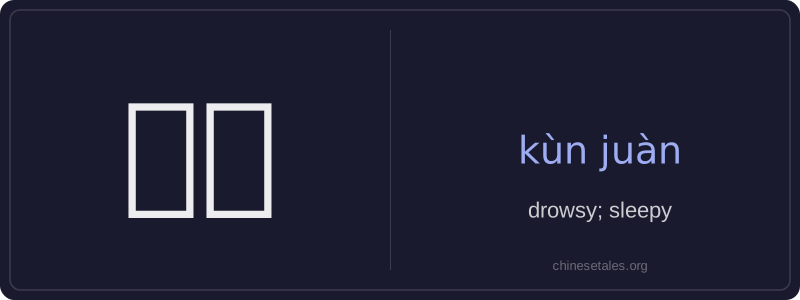
困倦 is an adjective meaning 'drowsy' or 'sleepy' — a physical state of tiredness that makes you want to sleep. It combines two characters with overlapping meanings: 困 (kùn) means 'tired', 'exhausted', or 'trapped', and 倦 (juàn) means 'weary', 'fatigued', or 'bored from overuse'. Together, they intensify the sense of mental and physical exhaustion, often implying a deep, heavy sleepiness rather than mild tiredness.
This word is commonly used in formal and semi-formal contexts — in health advice, workplace communication, or daily conversation about rest needs. Unlike colloquial terms like 想睡觉 (want to sleep) or 犯困 (suddenly feel sleepy), 困倦 carries a more objective, descriptive tone and often suggests prolonged lack of rest or sustained mental effort. It’s frequently paired with verbs like 感到 (feel), 出现 (appear), or 缓解 (relieve), and appears in phrases like 困倦感 (feeling of drowsiness) or 困倦乏力 (drowsy and weak).
Example Sentences
Related Words
背后
背后 literally means 'back + behind' and functions
认同
‘认同’ (tóng rèn) is a verb meaning ‘to ident
面条
‘面条’ (miàn tiáo) literally means ‘flour str
认为
‘认为’ (rèn wéi) is a transitive verb meaning
无论谁
‘无论谁’ (wú lùn shéi) is a pronoun meaning
不对
不对 (bù duì) literally combines 不 (bù), meani
中学
'Zhōngxué' literally combines 'zhōng' (middle)
见面
见面 literally means 'see face' — combining 见 (t