Word Explanation
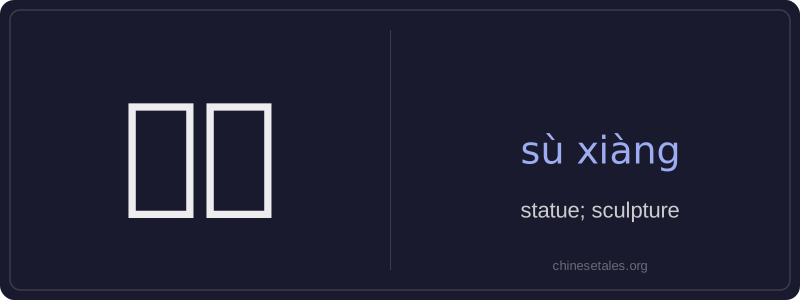
塑像 (sù xiàng) is a noun meaning 'statue' or 'sculpture' — a three-dimensional artwork created by shaping materials such as clay, bronze, stone, or plastic. The first character 塑 (sù) means 'to mold' or 'to shape', reflecting the physical process of forming material by hand or tool; the second character 像 (xiàng) means 'image', 'likeness', or 'representation'. Together, they literally mean 'a molded image', emphasizing both the method of creation and the representational nature of the object.
塑像 is commonly used for freestanding, life-sized or larger figurative works — especially those honoring people, animals, or mythological beings — and appears frequently in public spaces, museums, temples, and memorial sites. It carries a neutral-to-formal register and is more specific than the broader term 雕像 (diāo xiàng), which emphasizes carving rather than molding. While 塑像 can refer to any molded representation, it often implies artistic intention and permanence, not casual or temporary models.
Example Sentences
Related Words
面条
‘面条’ (miàn tiáo) literally means ‘flour str
背后
背后 literally means 'back + behind' and functions
认同
‘认同’ (tóng rèn) is a verb meaning ‘to ident
中学
'Zhōngxué' literally combines 'zhōng' (middle)
认为
‘认为’ (rèn wéi) is a transitive verb meaning
认可
认可 (rèn kě) is a formal, transitive verb meani
无论谁
‘无论谁’ (wú lùn shéi) is a pronoun meaning
不对
不对 (bù duì) literally combines 不 (bù), meani