Word Explanation
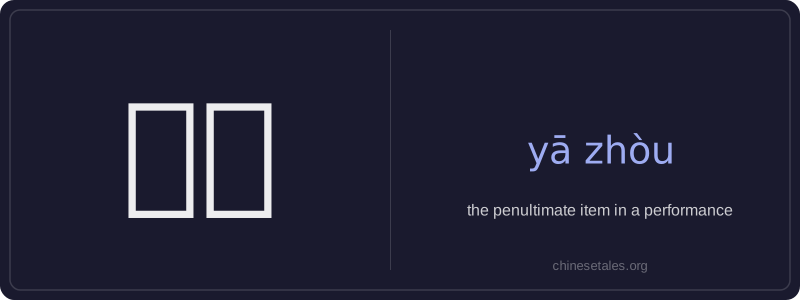
'Yā zhòu' literally means 'pressing the scroll axis' — a reference to traditional Chinese opera scrolls, where the final performance was rolled up last and secured by pressing down on its axis. Over time, the term evolved to mean the penultimate item in a sequence of performances, especially in arts or entertainment. It is not the finale (which is called '大轴' dà zhòu), but the highly anticipated act just before it — often featuring a star performer or a particularly impressive piece.
This word carries connotations of prestige, anticipation, and artistic hierarchy. It’s commonly used in contexts like concerts, variety shows, school talent shows, or cultural festivals. While rooted in classical theater, 'yā zhòu' is now widely understood in modern spoken and written Chinese. It functions exclusively as a noun and is rarely used outside performance-related sequences — you wouldn’t say 'the yā zhòu meeting' or 'yā zhòu chapter' unless metaphorically and with clear context.
Example Sentences
Related Words
面条
‘面条’ (miàn tiáo) literally means ‘flour str
背后
背后 literally means 'back + behind' and functions
认同
‘认同’ (tóng rèn) is a verb meaning ‘to ident
无论谁
‘无论谁’ (wú lùn shéi) is a pronoun meaning
中学
'Zhōngxué' literally combines 'zhōng' (middle)
认为
‘认为’ (rèn wéi) is a transitive verb meaning
认可
认可 (rèn kě) is a formal, transitive verb meani
不对
不对 (bù duì) literally combines 不 (bù), meani