Word Explanation
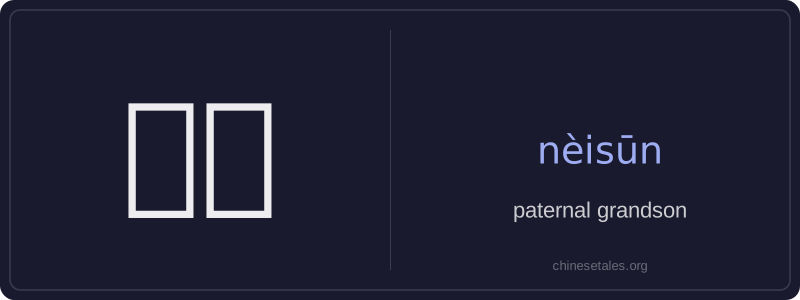
‘内孙’ (nèisūn) literally combines ‘内’ (nèi), meaning ‘inner’ or ‘paternal’, and ‘孙’ (sūn), meaning ‘grandson’. It specifically refers to a grandson on one’s son’s side — that is, the son of one’s own son. This term distinguishes paternal grandchildren from maternal ones (外孙, wàisūn), reflecting traditional Chinese kinship terminology that emphasizes lineage and clan affiliation. Unlike English, which uses the same word ‘grandson’ for both sides, Chinese makes this distinction clear in everyday speech and formal contexts.
The word is commonly used in family conversations, genealogical records, inheritance discussions, and when describing family trees. It carries a subtle connotation of closer familial duty or continuity in some cultural contexts, especially among older generations. While increasingly less emphasized in urban, modern families, ‘内孙’ remains widely understood and appears regularly in literature, legal documents, and intergenerational dialogue.
Example Sentences
Related Words
面条
‘面条’ (miàn tiáo) literally means ‘flour str
背后
背后 literally means 'back + behind' and functions
认同
‘认同’ (tóng rèn) is a verb meaning ‘to ident
无论谁
‘无论谁’ (wú lùn shéi) is a pronoun meaning
中学
'Zhōngxué' literally combines 'zhōng' (middle)
认为
‘认为’ (rèn wéi) is a transitive verb meaning
认可
认可 (rèn kě) is a formal, transitive verb meani
不对
不对 (bù duì) literally combines 不 (bù), meani