Word Explanation
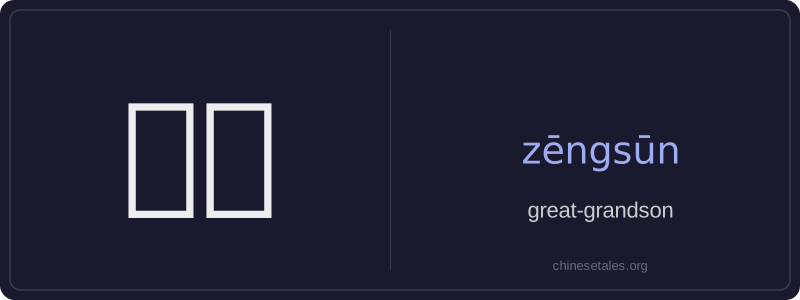
曾孙 (zēngsūn) means 'great-grandson' — the son of one's grandchild. The character 曾 (zēng) here functions as a prefix indicating 'removed by two generations' and often appears in kinship terms like 曾祖 (zēngzǔ, great-grandfather) and 曾孙女 (zēngsūnnǚ, great-granddaughter). 孙 (sūn) means 'grandchild', so together 曾孙 literally conveys 'grandchild’s child'. This term is used formally and respectfully when referring to family lineage, especially in genealogical contexts, family gatherings, or discussions about inheritance and elder care.
In Chinese culture, precise kinship terms reflect deep respect for familial hierarchy and generational continuity. 曾孙 is not used casually among peers but appears in official documents, family trees, or when elders speak proudly of their descendants. It carries warm, affectionate connotations when spoken by grandparents or great-grandparents, though the tone remains respectful rather than intimate.
Example Sentences
Related Words
面条
‘面条’ (miàn tiáo) literally means ‘flour str
背后
背后 literally means 'back + behind' and functions
认同
‘认同’ (tóng rèn) is a verb meaning ‘to ident
无论谁
‘无论谁’ (wú lùn shéi) is a pronoun meaning
中学
'Zhōngxué' literally combines 'zhōng' (middle)
认为
‘认为’ (rèn wéi) is a transitive verb meaning
认可
认可 (rèn kě) is a formal, transitive verb meani
不对
不对 (bù duì) literally combines 不 (bù), meani