Word Explanation
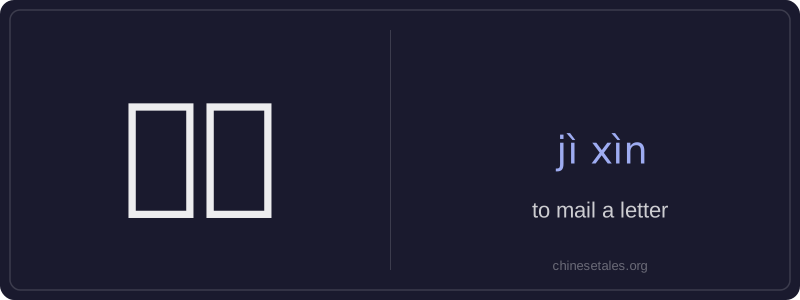
‘寄信’ is a verb meaning 'to mail a letter' — that is, to send a physical letter through the postal system. The first character, 寄 (jì), means 'to send' or 'to mail', often implying dispatching something to a recipient at a distance. The second character, 信 (xìn), means 'letter' or 'mail'. Together, they form a compound verb specifically for sending written correspondence by post — not email, text messages, or digital communication. This term is commonly used in everyday contexts like writing to family abroad, submitting documents, or sending holiday cards.
Although ‘寄信’ literally combines ‘send’ and ‘letter’, it functions as a single verbal unit and cannot be split or modified with aspect particles like 了 or 过 without changing the sentence structure (e.g., 寄了一封信, not *寄信了). It’s neutral in register — appropriate in both spoken and written Chinese — and remains widely understood despite the rise of digital messaging, especially among older generations or in formal or nostalgic contexts.
Example Sentences
Related Words
面条
‘面条’ (miàn tiáo) literally means ‘flour str
背后
背后 literally means 'back + behind' and functions
认同
‘认同’ (tóng rèn) is a verb meaning ‘to ident
无论谁
‘无论谁’ (wú lùn shéi) is a pronoun meaning
中学
'Zhōngxué' literally combines 'zhōng' (middle)
认为
‘认为’ (rèn wéi) is a transitive verb meaning
认可
认可 (rèn kě) is a formal, transitive verb meani
不对
不对 (bù duì) literally combines 不 (bù), meani