Word Explanation
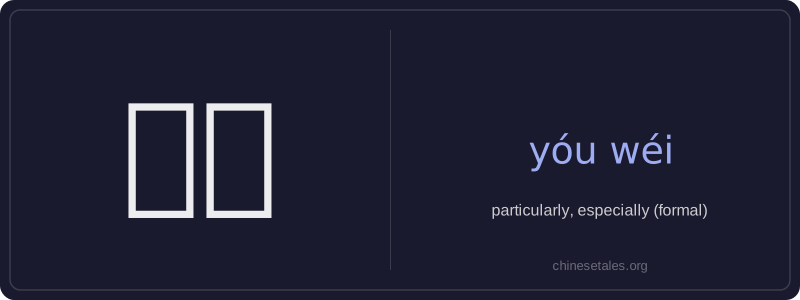
'尤为' is an adverb meaning 'particularly' or 'especially', used to emphasize that something stands out more than others in degree, intensity, or significance. It carries a formal, literary tone and appears frequently in written Chinese—such as essays, news reports, and academic writing—but is rare in casual speech. The character 尤 means 'especially' or 'outstandingly', while 为 functions here as a classical auxiliary that strengthens the emphasis; together, they form a fixed compound with heightened rhetorical weight.
This word typically modifies adjectives or verbs and often appears after the subject and before the predicate (e.g., '他尤为认真'). It cannot stand alone as a sentence element and never takes objects. Because of its elevated register, learners should avoid using it in informal conversations or texts where simpler alternatives like 特别 or 很 would sound more natural and appropriate.
Example Sentences
Related Words
面条
‘面条’ (miàn tiáo) literally means ‘flour str
背后
背后 literally means 'back + behind' and functions
认同
‘认同’ (tóng rèn) is a verb meaning ‘to ident
无论谁
‘无论谁’ (wú lùn shéi) is a pronoun meaning
中学
'Zhōngxué' literally combines 'zhōng' (middle)
认为
‘认为’ (rèn wéi) is a transitive verb meaning
认可
认可 (rèn kě) is a formal, transitive verb meani
不对
不对 (bù duì) literally combines 不 (bù), meani