Word Explanation
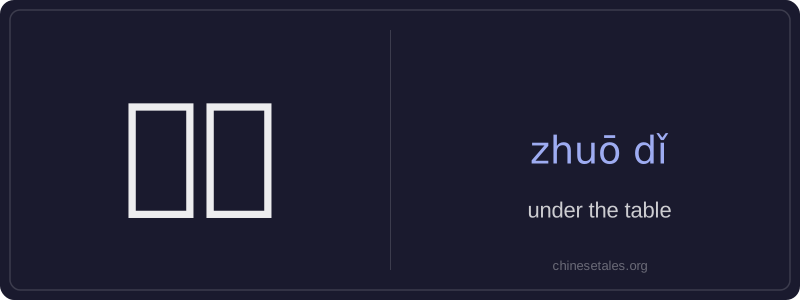
‘桌底’ literally combines 桌 (zhuō), meaning 'table', and 底 (dǐ), meaning 'bottom' or 'underside'. Together, it denotes the physical space directly beneath a table — not just the surface area but the enclosed zone under its horizontal plane. It functions primarily as a noun referring to that location, but in context can also act like a prepositional phrase indicating position (e.g., '在桌底'), especially in spoken Chinese where the preposition 在 is often omitted in casual speech.
This term appears frequently in everyday descriptions involving objects, animals, or people occupying low or hidden spaces — such as a cat hiding, a dropped item rolling away, or children playing. Unlike more formal terms like 桌子下方 (zhuōzi xiàfāng), 桌底 is concise, colloquial, and commonly used in both spoken and informal written contexts. It implies proximity and containment — the object isn’t merely ‘under the table’ in a general sense, but specifically tucked into the sheltered area beneath it.
Example Sentences
Related Words
面条
‘面条’ (miàn tiáo) literally means ‘flour str
背后
背后 literally means 'back + behind' and functions
认同
‘认同’ (tóng rèn) is a verb meaning ‘to ident
无论谁
‘无论谁’ (wú lùn shéi) is a pronoun meaning
中学
'Zhōngxué' literally combines 'zhōng' (middle)
外语
‘外语’ literally means ‘outside language’ —
认为
‘认为’ (rèn wéi) is a transitive verb meaning
认可
认可 (rèn kě) is a formal, transitive verb meani