Word Explanation
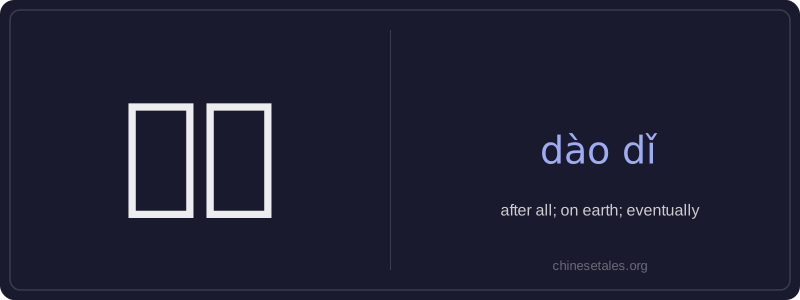
到底 (dào dǐ) is an adverb used to express emphasis, impatience, or insistence—often translating to 'on earth', 'after all', or 'in the end'. Literally, 到 means 'to reach' and 底 means 'bottom' or 'base'; together, they evoke the image of going all the way to the very bottom—hence the sense of probing deeply, demanding clarity, or indicating finality. It frequently appears in questions to convey frustration or curiosity ('What on earth is happening?') or in statements to stress inevitability or ultimate outcome ('He’ll find out eventually').
This word adds emotional weight and rhetorical force. It’s common in spoken Mandarin and informal writing, especially when speakers seek explanation, express doubt, or signal a turning point. Unlike neutral words like 最后 (zuìhòu, 'finally'), 到底 carries subjective attitude—impatience, skepticism, or determination—and often implies that something has been long awaited or long debated.
Example Sentences
Related Words
面条
‘面条’ (miàn tiáo) literally means ‘flour str
背后
背后 literally means 'back + behind' and functions
认同
‘认同’ (tóng rèn) is a verb meaning ‘to ident
无论谁
‘无论谁’ (wú lùn shéi) is a pronoun meaning
中学
'Zhōngxué' literally combines 'zhōng' (middle)
外语
‘外语’ literally means ‘outside language’ —
认为
‘认为’ (rèn wéi) is a transitive verb meaning
认可
认可 (rèn kě) is a formal, transitive verb meani