Word Explanation
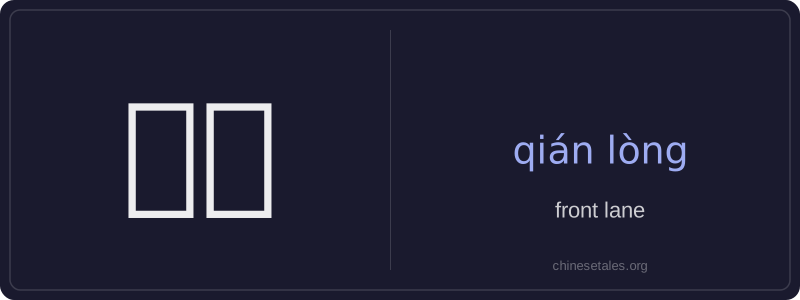
‘前弄’ (qián lòng) is a compound noun meaning 'front lane' or 'front alley', commonly used in urban or historic residential contexts—especially in older neighborhoods of cities like Shanghai and Ningbo. The character 前 (qián) means 'front' or 'before', indicating position or sequence, while 弄 (lòng) refers to a narrow lane or alleyway, often between rows of traditional shikumen or courtyard houses. Together, they denote the lane situated at the front of a residential compound or complex, distinguishing it from a 'back lane' (后弄, hòu lòng).
This term appears frequently in local addresses, real estate descriptions, and oral directions in certain dialect-influenced Mandarin contexts. It reflects the spatial organization of traditional Chinese housing where compounds have clearly defined front and back access points. Though still understood nationwide, its usage is most natural and frequent in eastern China, particularly in areas with historic lane-based architecture.
Example Sentences
Related Words
面条
‘面条’ (miàn tiáo) literally means ‘flour str
背后
背后 literally means 'back + behind' and functions
认同
‘认同’ (tóng rèn) is a verb meaning ‘to ident
无论谁
‘无论谁’ (wú lùn shéi) is a pronoun meaning
中学
'Zhōngxué' literally combines 'zhōng' (middle)
外语
‘外语’ literally means ‘outside language’ —
认为
‘认为’ (rèn wéi) is a transitive verb meaning
认可
认可 (rèn kě) is a formal, transitive verb meani